
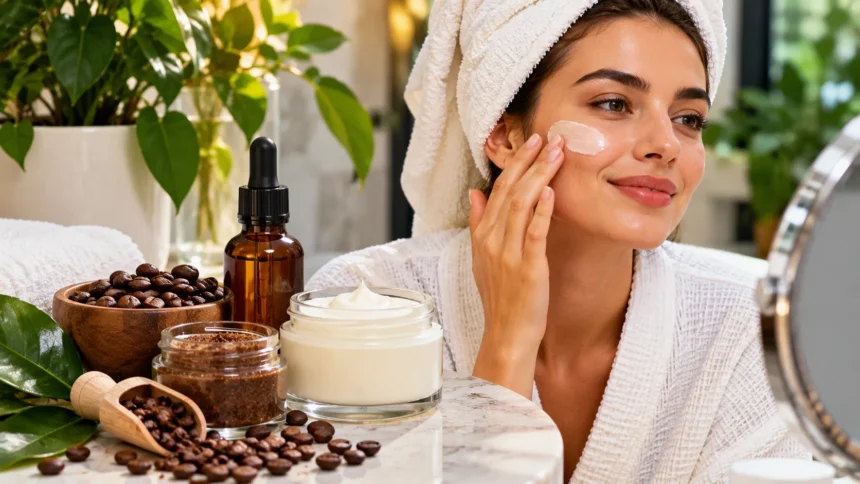
Caffeine is not just an ingredient in your morning coffee. It has become popular in skincare because of its potential to reduce puffiness, provide antioxidant protection, and temporarily improve the appearance of tired skin. Many eye creams, facial serums, and moisturizers now contain caffeine as an active ingredient.
However, understanding how caffeine works on the skin is important before adding it to your routine. Although it has several promising benefits, not every skincare claim is supported by strong scientific evidence. Its effectiveness depends on the product formulation, concentration, and individual skin concerns.
This guide explains caffeine in skincare, its major benefits, possible side effects, and the best ways to use it. You will also learn whether caffeine helps with dark circles, wrinkles, oily skin, and other common concerns.
What Is Caffeine in Skincare?
Caffeine is a naturally occurring compound found in coffee beans, tea leaves, and certain plants. In skincare, it is used as an active ingredient in products designed to refresh and protect the skin. Its antioxidant properties and temporary effects on blood vessels make it particularly popular in treatments for tired-looking eyes.
Unlike drinking coffee, applying caffeine directly to the skin targets the area where the product is used. Topical caffeine can penetrate the outer skin layers, although absorption depends on the formulation. Its effects may vary according to the concentration, supporting ingredients, and how consistently the product is applied.
You can find caffeine in eye creams, facial serums, moisturizers, masks, and body lotions. Some formulations combine it with hyaluronic acid, niacinamide, or peptides to address multiple concerns. While caffeine is not an essential skincare ingredient, it can be a useful addition when chosen for a specific purpose.
How Does Caffeine Work on the Skin?
One important property of caffeine is its ability to influence blood vessel activity. It can temporarily narrow certain blood vessels, a process called vasoconstriction. This effect may help improve the appearance of some types of under-eye puffiness, although results depend on the underlying cause and the way the product is formulated.
Caffeine also acts as an antioxidant, helping counter the activity of unstable molecules called free radicals. These molecules can contribute to skin damage associated with environmental exposure. Antioxidants are valuable in skincare because they support the skin’s defenses, but caffeine does not replace sunscreen or other established protective measures.
Another reason caffeine attracts attention is its potential effect on inflammation and fluid retention. Laboratory research suggests several biological actions that may benefit skin appearance. However, findings from laboratory experiments do not always translate into noticeable results in people, so realistic expectations are important when evaluating caffeine-based skincare products.
Major Benefits of Caffeine in Skincare
One of the most recognized caffeine skincare benefits is its potential to reduce the appearance of puffiness. This makes it a popular ingredient in eye treatments and morning skincare routines. Some people notice a temporary improvement in the appearance of swollen under-eye areas, particularly when using a cooling product.
Another benefit is antioxidant activity, which may help protect skin cells against oxidative stress. Environmental factors such as pollution and ultraviolet exposure can generate free radicals. Although caffeine has promising antioxidant properties, evidence that topical caffeine alone prevents visible skin aging remains limited, and daily sun protection is still essential.
Caffeine may also make the skin appear temporarily smoother and more refreshed. Some body creams use it to improve the appearance of uneven skin texture. However, effects such as skin tightening are generally temporary, and caffeine should not be considered a permanent solution for wrinkles, cellulite, or loss of firmness.
Caffeine for Dark Circles Under the Eyes
Dark circles are among the most common reasons people choose caffeine eye creams. Under-eye discoloration may result from visible blood vessels, pigmentation, genetics, or natural facial structure. Caffeine may temporarily reduce the visibility of certain vascular dark circles, but it cannot address every cause of discoloration beneath the eyes.
Products containing caffeine are often marketed for tired-looking eyes because they may help reduce puffiness alongside some types of discoloration. However, hereditary pigmentation and hollow tear troughs are unlikely to respond significantly. Choosing the right treatment requires understanding whether the darkness comes from pigment, shadows, or visible blood vessels.
For better results, apply a small amount of caffeine eye serum to clean skin according to the product instructions. Gentle application helps avoid unnecessary irritation around this delicate area. A consistent sleep schedule, sun protection, and treatment of relevant allergies may also help address factors that contribute to dark-looking under-eyes.
Can Caffeine Reduce Under-Eye Puffiness?
Under-eye puffiness can develop because of temporary fluid accumulation, allergies, sleep changes, or natural aging. Caffeine-containing skincare products may provide temporary improvement by affecting blood vessels in the treated area. However, the response varies, and persistent under-eye bags caused by structural changes may not improve much with topical products.
Many people prefer using caffeine eye creams in the morning when puffiness is more noticeable. A chilled eye product may feel soothing and temporarily reduce swelling through cooling. These effects should not be confused with permanent changes, since the appearance of the eye area can change throughout the day.
When applying an eye treatment, use the recommended amount and avoid rubbing or stretching the skin. Apply the product around the orbital area while keeping it away from the eyes themselves. If puffiness is sudden, painful, persistent, or accompanied by redness or vision changes, professional medical advice is more appropriate than cosmetic treatment.
Is Caffeine Good for Wrinkles and Aging Skin?
Caffeine is frequently included in anti-aging skincare because it has antioxidant properties. Free radicals can contribute to changes in collagen and other skin structures over time. By helping counter oxidative stress, antioxidants may support skin protection, although clinical evidence for caffeine as an independent anti-wrinkle treatment is still limited.
Some caffeine serums are formulated to make the skin look smoother and temporarily firmer. The immediate improvement may come partly from moisturizing ingredients or other components in the formula. Caffeine does not have the same established evidence for reducing wrinkles as ingredients such as retinoids, making realistic expectations important.
For a practical anti-aging routine, caffeine can be used alongside moisturizer and broad-spectrum sunscreen. Ingredients such as vitamin C or retinoids may address additional concerns depending on skin tolerance. The most effective routine is usually one that protects the skin consistently rather than relying on a single ingredient for every visible sign of aging.
Caffeine Benefits for Oily and Acne-Prone Skin
People with oily skin often look for lightweight products that improve appearance without creating a greasy finish. Caffeine can be included in water-based serums and gel moisturizers that suit these preferences. However, there is insufficient clinical evidence that caffeine itself reliably reduces sebum production or controls oily skin.
Caffeine has demonstrated certain anti-inflammatory effects in experimental research, which has generated interest in acne-related skincare. Nevertheless, research does not establish topical caffeine as an effective acne treatment. Ingredients such as salicylic acid, benzoyl peroxide, and appropriate retinoids have stronger evidence for treating acne and preventing clogged pores.
If you have acne-prone skin, choose caffeine products that are non-comedogenic and compatible with your existing routine. Avoid assuming that a product will prevent breakouts simply because caffeine appears on its ingredient label. Pay attention to the complete formulation, particularly fragrances, heavy textures, and other ingredients that may irritate your skin.
Caffeine for Skin Brightening and Uneven Skin Tone
A brighter complexion is another reason caffeine appears in facial skincare products. Its antioxidant activity may help defend against environmental stress that contributes to dull-looking skin. Some caffeine formulations also improve surface hydration, creating a fresher appearance, although this moisturizing effect often comes from other ingredients within the product.
Caffeine is sometimes described as a skin-brightening ingredient, but there is limited evidence that it directly reduces melanin production enough to treat hyperpigmentation. Dark spots caused by acne, sun exposure, or hormonal changes generally require more targeted approaches. Niacinamide, azelaic acid, and other established brightening ingredients may be more appropriate.
For uneven skin tone, sun protection remains one of the most important daily steps. Broad-spectrum sunscreen helps prevent ultraviolet exposure from worsening existing pigmentation. Caffeine can complement a routine focused on skin appearance, but relying on it alone is unlikely to produce major changes in stubborn discoloration or dark spots.
How to Use Caffeine in Your Skincare Routine
Start by selecting a caffeine skincare product designed for your main concern. Eye creams are commonly used for puffiness, while facial serums may focus on antioxidant support. Read the instructions carefully because different formulations contain different concentrations and combinations of ingredients that can influence how frequently they should be applied.
After cleansing, apply a caffeine serum or eye treatment as directed by its manufacturer. Lightweight serums generally go before thicker moisturizers, while eye creams can be applied according to their specific instructions. Finish your morning routine with broad-spectrum sunscreen rated SPF 30 or higher to protect the skin from ultraviolet damage.
Caffeine products can often be used in the morning or evening, depending on the formulation. Morning application is popular for addressing temporarily puffy eyes. Introduce new products gradually, especially if your skin is sensitive, and assess how your skin responds rather than assuming that more frequent application will produce stronger results.
Best Ingredients to Combine With Caffeine
Caffeine and hyaluronic acid are often combined in products designed for dehydrated or tired-looking skin. Hyaluronic acid attracts water and helps improve surface hydration. Together, these ingredients can support a smoother appearance, with caffeine contributing its potential antioxidant and temporary depuffing effects while hyaluronic acid addresses moisture needs.
Niacinamide is another ingredient commonly paired with caffeine in skincare formulations. It can help support the skin barrier and improve the appearance of uneven tone. This combination may be useful in lightweight facial products, although the benefits depend on the concentrations, formulation quality, and whether the individual ingredients are suitable for your skin.
Vitamin C and peptides may also appear alongside caffeine in facial serums and eye creams. Vitamin C provides antioxidant benefits, while certain peptides may support improvements in skin appearance. Combining ingredients does not automatically make a product more effective, so choosing a well-formulated treatment is more important than simply seeking the longest ingredient label.
Side Effects and Precautions of Caffeine in Skincare
Topical caffeine is generally well tolerated in appropriately formulated cosmetic products. However, some people may experience redness, dryness, itching, or irritation after using caffeine-containing skincare. These reactions can be caused by caffeine itself or by other ingredients, including fragrances, preservatives, and additional active compounds in the product.
The delicate skin around the eyes deserves particular attention when applying caffeine eye treatments. Avoid getting the product inside your eyes, and follow the recommended application instructions. If irritation develops, stop using the product and allow your skin to recover before introducing another treatment or seeking professional guidance.
Before trying a new caffeine serum, test a small amount on a limited area of skin as recommended for the product. People with eczema, rosacea, or easily irritated skin may benefit from choosing fragrance-free formulations. Persistent discomfort, swelling, or an unusual skin reaction should be evaluated by a qualified healthcare professional.
How to Choose the Best Caffeine Skincare Products
Selecting the right caffeine product starts with understanding your skin concern rather than following marketing claims. For morning puffiness, a gentle caffeine eye serum may be suitable. For general facial care, a lightweight moisturizer or antioxidant serum containing caffeine may be more practical than purchasing several products with overlapping purposes.
Check the complete ingredient label and consider the supporting ingredients in the formulation. Products with hyaluronic acid, glycerin, or ceramides may provide additional hydration and barrier support. There is no universally established ideal caffeine concentration for every skincare concern, so a higher percentage should not automatically be considered better.
Packaging and product compatibility also matter when choosing skincare. An easy-to-use container can help maintain hygienic application, while clear instructions encourage consistent use. Choose reputable manufacturers that explain what their products are designed to do, and be cautious of exaggerated promises about permanently removing dark circles, wrinkles, or under-eye bags.
Conclusion
Caffeine in skincare is a useful ingredient with promising antioxidant properties and potential temporary benefits for under-eye puffiness. Its popularity comes from its inclusion in eye creams, facial serums, and other products designed to refresh tired-looking skin. However, the strength of scientific evidence varies depending on the specific benefit being claimed.
For many people, caffeine products work best as supportive additions to an existing skincare routine. They may improve certain temporary concerns, but they cannot permanently correct hereditary dark circles, structural under-eye bags, or deep wrinkles. Healthy skin habits and appropriately selected skincare ingredients remain important for maintaining long-term results.
When choosing caffeine skincare products, focus on your needs, skin sensitivity, and the quality of the overall formulation. Introduce new products carefully and follow the manufacturer’s directions. With realistic expectations, caffeine can become a practical part of a balanced routine focused on skin comfort, hydration, and protection.
Frequently Asked Questions
Is caffeine good for your skin?
Yes, caffeine has antioxidant properties and may temporarily reduce certain types of under-eye puffiness. However, its effectiveness depends on the formulation, and evidence for many additional skincare claims remains limited.
Can I use caffeine serum every day?
Many caffeine serums are suitable for daily use when applied according to the manufacturer’s instructions. Start gradually if you have sensitive skin, and stop using the product if irritation develops.
Does caffeine remove dark circles permanently?
No, caffeine does not permanently remove dark circles. It may temporarily improve discoloration associated with visible blood vessels, but genetic pigmentation, facial shadows, and structural causes typically need different approaches.
Is caffeine better than vitamin C for the skin?
Neither ingredient is universally better. Caffeine may help with temporary puffiness, while vitamin C has stronger evidence for supporting antioxidant protection and improving certain pigmentation concerns when properly formulated.
How long does caffeine skincare take to work?
Some people notice temporary improvements in puffiness shortly after application, although results vary. Other claimed benefits are less predictable, and there is no established timeline for meaningful improvement across all caffeine skincare products.