

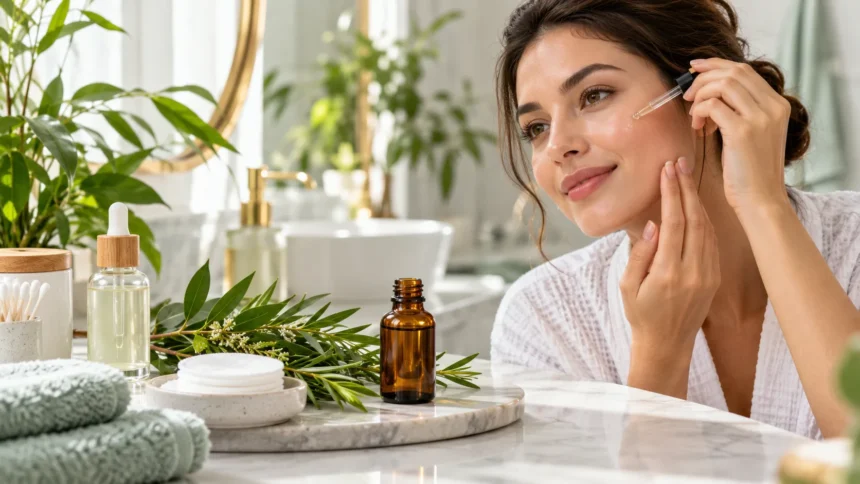
Tea tree oil is a popular natural ingredient found in skincare products, including facial cleansers, creams, and acne treatments. Extracted from the leaves of the Australian tea tree plant, this essential oil is known for its antimicrobial properties. Many people explore tea tree oil for skin because of its potential benefits for blemishes and certain common skin concerns.
Although tea tree oil has been used in traditional skincare practices for generations, scientific research supports only some of its claimed benefits. Studies suggest it may help with mild acne and certain fungal skin conditions, but evidence remains limited. Its concentrated nature also means that improper application can cause dryness, irritation, or allergic reactions.
Understanding how tea tree oil works is important before including it in a skincare routine. This guide explains its properties, potential uses, possible side effects, and important safety precautions. You will also learn how to recognize unsuitable products, protect sensitive skin, and understand when professional dermatological care is a better option.
What Is Tea Tree Oil?
Tea tree oil is an essential oil extracted from the leaves of Melaleuca alternifolia, a plant native to Australia. The oil is produced primarily through steam distillation, which separates aromatic compounds from plant material. It has a distinctive herbal scent and appears in various cosmetic, personal care, and skincare formulations.
The oil contains several naturally occurring compounds, including terpinen-4-ol, which has been studied for antimicrobial and anti-inflammatory activity. Laboratory experiments suggest that some of these compounds can affect certain bacteria and fungi. However, laboratory findings do not automatically demonstrate that tea tree oil can successfully treat human skin conditions.
Tea tree oil is widely available as a concentrated essential oil or as an ingredient in formulated skincare products. These forms differ significantly in strength and potential for irritation. Products developed specifically for facial skincare generally provide clearer usage guidance than undiluted essential oils sold for multiple purposes.
How Does Tea Tree Oil Work on Skin?
Tea tree oil contains chemical compounds that demonstrate antimicrobial activity under laboratory conditions. These substances may interfere with certain microorganisms, including bacteria and fungi. Researchers have investigated whether these properties can be useful for common skin concerns, particularly acne and superficial fungal infections.
Another area of research involves tea tree oil’s potential anti-inflammatory effects. Some small studies suggest that particular components may influence inflammatory responses. However, inflammation has many causes, and the presence of anti-inflammatory compounds does not establish that tea tree oil is suitable for every irritated skin condition.
The effects of tea tree oil depend on its concentration, product formulation, and the condition being addressed. Human skin is also more complex than laboratory testing environments. A product that demonstrates antimicrobial activity in a laboratory may still cause irritation or offer little clinical benefit when applied to the skin.
Benefits of Tea Tree Oil for Skin
One potential benefit of tea tree oil is its role in certain acne skincare products. Limited clinical research suggests that formulations containing tea tree oil may modestly reduce some acne symptoms. Nevertheless, major dermatology guidelines do not currently consider the evidence strong enough to recommend it as a standard acne treatment.
Tea tree oil has also been investigated for superficial fungal conditions, including athlete’s foot. Some studies suggest possible improvement in symptoms, although established antifungal medications generally have more reliable evidence. This distinction matters because an ingredient with antimicrobial properties is not automatically an effective treatment for an infection.
Other proposed benefits include soothing minor inflammation and supporting general skin hygiene. Scientific evidence for these uses remains uncertain, particularly for eczema, wounds, and other sensitive skin concerns. Tea tree oil should therefore be viewed as a potentially useful cosmetic ingredient rather than a universal remedy for skin problems.
Tea Tree Oil for Acne and Pimples
Acne develops through several interacting processes, including clogged pores, excess oil production, inflammation, and changes involving skin bacteria. Tea tree oil has attracted research interest because of its antimicrobial and anti-inflammatory properties. Some small studies indicate that certain topical formulations may help reduce mild acne lesions.
However, tea tree oil is not as well established as conventional acne treatments. Ingredients such as benzoyl peroxide and topical retinoids have stronger clinical evidence for many forms of acne. The most suitable treatment depends on acne severity, individual skin sensitivity, and guidance from a qualified healthcare professional.
People with acne-prone skin should also consider the possibility of irritation from essential oils. Redness, dryness, or contact dermatitis can make an existing skincare problem more uncomfortable. A gentle cleanser, suitable moisturizer, and evidence-based treatment plan often provide a more dependable foundation for managing acne.
Is Tea Tree Oil Good for Oily Skin?
Tea tree oil frequently appears in products marketed toward oily and acne-prone skin. Its popularity comes partly from its antimicrobial properties and association with blemish-focused skincare. However, there is limited evidence that tea tree oil directly controls sebum production or permanently reduces excessive skin oiliness.
Oily skin is influenced by genetics, hormones, and other biological factors. Removing too much surface oil through harsh products can contribute to dryness and irritation. A skincare product containing tea tree oil may feel refreshing, but this sensation does not necessarily mean it improves the skin’s underlying oil balance.
For people with oily skin, gentle cleansing and non-comedogenic moisturizers are often useful components of routine care. Products should be selected according to skin tolerance rather than strong fragrances or intense cleansing sensations. Tea tree oil is optional and should not replace established skincare practices.
Can Tea Tree Oil Help With Dry or Sensitive Skin?
Dry skin occurs when the outer skin barrier has difficulty retaining adequate moisture. Tea tree oil is not a moisturizing ingredient and may contribute to dryness in some individuals. Concentrated formulations can be particularly irritating, making them unsuitable for skin that is already uncomfortable or easily reactive.
Sensitive skin may respond to tea tree oil with burning, itching, redness, or a rash. People with eczema or a history of reactions to fragrances and essential oils may be especially vulnerable. For these individuals, fragrance-free moisturizers and gentle skincare products are generally more appropriate choices.
A natural ingredient is not necessarily safer than a synthetic one. Plant extracts contain biologically active substances capable of causing allergic responses. Anyone who experiences persistent irritation should discontinue the suspected product and seek professional advice rather than continuing exposure in the hope that the skin will adjust.
Tea Tree Oil for Fungal Skin Conditions
Tea tree oil has been studied for its potential effects on certain fungal infections affecting the skin. Athlete’s foot is one example because the condition involves fungi that commonly affect the feet. Limited research suggests tea tree oil formulations may improve some symptoms, but the evidence is not conclusive.
Fungal infections require an accurate diagnosis because other skin conditions can produce similar symptoms. Irritant dermatitis, eczema, and some bacterial conditions may resemble fungal infections. Applying an unsuitable product can delay effective treatment or create additional irritation, particularly when the skin is already inflamed.
Established antifungal medications generally offer more dependable treatment options for confirmed fungal skin conditions. Persistent, spreading, painful, or recurrent symptoms deserve medical assessment. Tea tree oil should not be relied upon as a substitute for appropriate diagnosis and treatment of suspected infections.
How to Use Tea Tree Oil Products More Safely
Tea tree oil is found in facial cleansers, lotions, and other products specifically formulated for topical use. These products may provide more predictable concentrations than undiluted essential oil. Following the manufacturer’s directions and avoiding unnecessary combinations with irritating skincare ingredients can help reduce the likelihood of unwanted reactions.
Applying undiluted tea tree essential oil directly to the face is not recommended because concentrated oil can irritate or sensitize the skin. Homemade mixtures also create uncertainty about concentration and product stability. Choosing a properly formulated skincare product is generally more practical than experimenting with concentrated essential oils.
A cautious approach includes testing a small amount of a new skincare product on a limited area according to its directions. If redness, itching, or discomfort develops, discontinue use. A patch test cannot guarantee that an allergic reaction will never occur, so continued attention to skin responses remains important.
Side Effects of Tea Tree Oil on Skin
Tea tree oil can cause several unwanted skin reactions, including dryness, redness, itching, and stinging. These effects may occur even when a product is intended for topical application. The likelihood of irritation can increase with concentrated formulations or use on already sensitive skin.
Allergic contact dermatitis is another recognized concern. This reaction occurs when the immune system responds to a substance contacting the skin. Tea tree oil that has deteriorated after prolonged exposure to air, heat, or light may be more likely to cause certain skin reactions.
Severe or persistent symptoms should not be ignored. Discontinuing the suspected product and obtaining medical guidance can help prevent further irritation. Swelling, extensive rash, or other concerning symptoms may require prompt assessment, especially when the reaction develops near sensitive areas.
Important Tea Tree Oil Safety Precautions
Tea tree oil is intended for external applications in appropriately formulated products and must never be swallowed. Ingestion can cause serious poisoning, including neurological symptoms and other dangerous effects. Bottles should be kept securely away from young children and pets, and accidental ingestion requires urgent medical or poison-control advice.
The oil should also be kept away from the eyes, inside the nose, mouth, and other delicate areas. Direct exposure can cause significant irritation, particularly around sensitive tissues. Tea tree oil should not be applied to open wounds, serious burns, or damaged skin without guidance from a healthcare professional.
People who are pregnant, breastfeeding, managing chronic skin conditions, or using prescription dermatological treatments should discuss new essential oil products with a clinician. Safety information varies according to formulation and individual circumstances. Avoid assuming that a skincare product is risk-free simply because it contains a familiar botanical ingredient.
How to Choose a Tea Tree Oil Skincare Product
Choosing a tea tree oil skincare product begins with understanding its intended purpose and ingredient list. A facial cleanser, for example, differs from a concentrated essential oil in formulation and exposure time. Products should clearly identify their ingredients and provide directions appropriate to the skin area being treated.
Consumers should also consider fragrances, preservatives, and other active ingredients that may affect skin tolerance. A product containing multiple potentially irritating substances can be uncomfortable even when the tea tree oil concentration is relatively low. Clear labeling and reputable manufacturing practices are more meaningful than unsupported claims about guaranteed results.
Packaging and storage also matter because tea tree oil can change when exposed to environmental conditions. Products should be kept according to manufacturer instructions and discarded when expired or visibly altered. Strong marketing language such as natural, pure, or chemical-free should not replace an evaluation of actual product safety.
Tea Tree Oil vs Other Skincare Ingredients
Tea tree oil differs from common moisturizing ingredients such as glycerin and hyaluronic acid. Moisturizers primarily support skin hydration, while tea tree oil is studied for possible antimicrobial and anti-inflammatory activity. These ingredients serve different purposes and should not be considered interchangeable parts of a skincare routine.
For acne management, benzoyl peroxide and topical retinoids have stronger evidence than tea tree oil. Salicylic acid may also be useful for certain clogged-pore concerns. Treatment choice depends on skin sensitivity, acne severity, and individual circumstances rather than the popularity of a particular ingredient.
Niacinamide and other barrier-supporting ingredients may be appropriate in some skincare products, especially where tolerability is important. However, no ingredient works equally well for every person. A simple routine using a gentle cleanser, moisturizer, and appropriate sun protection is often a sensible starting point before considering additional treatments.
Common Mistakes to Avoid With Tea Tree Oil
One common mistake is assuming that more concentrated tea tree oil produces better skincare results. Higher concentrations can increase the chance of irritation without guaranteeing improved effectiveness. Skin reactions may also develop after repeated exposure, even when a product initially appears comfortable.
Another mistake is combining several strong skincare treatments without considering their combined effects. Exfoliating acids, retinoids, and certain cleansing products can already contribute to dryness. Adding irritating essential oil formulations may make it difficult to determine which ingredient is causing discomfort.
Relying on tea tree oil for every skin concern is also problematic. Acne, eczema, fungal infections, and allergic reactions have different causes and treatment needs. Accurate diagnosis and appropriate care are more important than using a single popular ingredient for unrelated conditions.
Conclusion
Tea tree oil is a botanical ingredient commonly used in skincare products because of its antimicrobial properties. Limited research suggests that certain formulations may help with mild acne and some superficial fungal skin concerns. However, evidence remains insufficient to consider it a reliable treatment for every skin condition.
Safety is particularly important because tea tree oil can cause dryness, irritation, and allergic contact dermatitis. Concentrated essential oil should not be applied directly to the face, and tea tree oil must never be swallowed. Properly formulated products, clear instructions, and attention to individual skin reactions can reduce avoidable risks.
If you are considering tea tree oil for skin, focus on realistic expectations and gentle skincare practices. The ingredient may have a limited role in some routines, but it is not essential for healthy skin. Persistent acne, suspected infections, and unexplained irritation are better addressed with guidance from a qualified healthcare professional.
Frequently Asked Questions (FAQs)
Is tea tree oil good for your skin?
Tea tree oil may offer limited benefits for mild acne and certain superficial fungal conditions. However, research remains incomplete, and the ingredient can cause irritation or allergic reactions, particularly on sensitive skin.
Can I apply tea tree oil directly to my face?
Applying undiluted tea tree essential oil directly to your face is not recommended because it can cause irritation. Properly formulated skincare products are generally preferable, and their instructions should be followed carefully.
Does tea tree oil remove pimples?
Some studies suggest tea tree oil formulations may modestly improve mild acne. However, results vary, and established acne treatments have stronger evidence. Persistent or severe acne should be assessed by a healthcare professional.
Can tea tree oil cause skin irritation?
Yes. Tea tree oil can cause redness, itching, dryness, burning, or allergic contact dermatitis. Discontinue any product that produces irritation and seek medical advice if symptoms are severe or persistent.
Is tea tree oil suitable for sensitive skin?
Tea tree oil may not be suitable for sensitive skin, particularly for individuals with eczema or fragrance allergies. Gentle, fragrance-free skincare products are usually more appropriate when the skin barrier is easily irritated.