

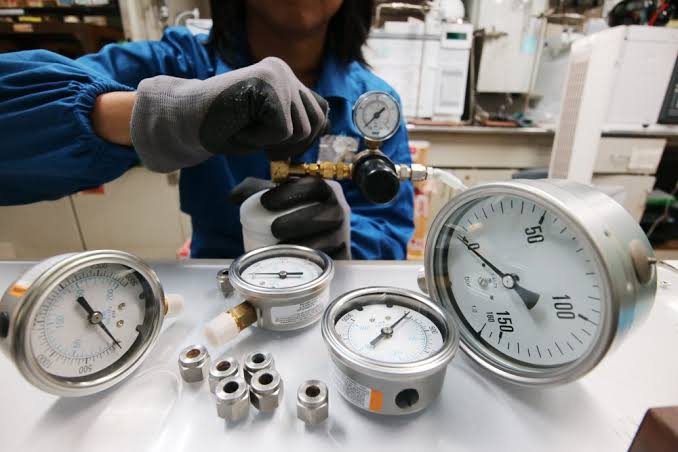
Pressure readings guide safe tank operation, transfers, filtration, gas supply, and CIP. A gauge that is legible but inaccurate can hide an unsafe condition or send operators after the wrong fault. Calibration starts with an inventory of each instrument’s range, purpose, and consequence of a bad reading, then uses a traceable reference and a documented interval.
When comparing brewery pressure gauge, start with the process duty and the conditions that will expose a weakness. A catalogue capacity or single performance number cannot show how the unit will behave across normal production, cleaning, start-up, and a demanding recipe.
What the Equipment Must Accomplish
Distinguish a local indication used for operator awareness from a transmitter used by an interlock or control loop. The latter may need tighter verification and proof testing. Select a range that puts normal operating pressure in a useful part of the scale; a very high-range gauge makes small but important changes hard to see. Pressure and vacuum are different service cases, and the instrument must be rated for the fluid and cleaning conditions.
How to Diagnose the Current Problem
A gauge that does not return to zero, sticks while pressure changes, or disagrees with a second instrument deserves investigation. Isolate it safely and check for a blocked diaphragm or damaged seal before adjusting the pointer. Compare readings at more than one pressure point. A one-point match near normal operation can conceal a span error. Record whether the fault appeared after a pressure surge, freeze, washdown, or maintenance.
Which Design Details Matter
Specify range, accuracy class, overpressure protection, sanitary connection, diaphragm material, fill fluid if used, temperature rating, and washdown protection. Digital transmitters need signal range and fail behavior defined. Use a removable or serviceable installation that does not leave a dead leg. If a gauge protects a pressure vessel indirectly by informing an operator, it does not replace a correctly sized independent relief device.
Utilities and Installation Requirements
Provide an isolation method and safe venting point for calibration without exposing a technician to hot beer, chemical, or CO2. Protect capillaries and wiring from impact. For differential pressure across filters or pumps, specify whether the instrument reads two ports directly or subtracts two independent measurements. Label units consistently. A mix of psi, bar, and kPa on the same panel increases the chance of a setpoint error.
Cleaning and Safety Requirements
Clean product-contact diaphragms within the normal sanitary procedure and inspect for dents or deposits. Do not exceed a transmitter’s temperature or chemical limits during CIP. After removal, use the correct gasket and verify leak-tightness. Keep calibration seals or configuration access controlled. A visibly damaged instrument should be replaced even if it happens to pass one check point.
Common Specification Mistakes
A calibration certificate from the supplier is not proof that the installed instrument stayed accurate after shipping, installation, and process exposure. Neither is a manufacturer sticker a substitute for a current site record. Prioritize gauges on pressure vessels, gas systems, and quality-critical transfers. If a gauge fails, assess the product or operating period that relied on its reading before simply fitting a new one.
How to Verify Performance
Use a suitable reference across the operating range, including zero, rising and falling points, and any alarm threshold. Record as-found and as-left values, acceptance tolerance, instrument ID, date, method, and technician. Test the controller’s displayed value and alarm action separately from sensor calibration. Keep the next-due date visible. A trend of drift can justify a shorter interval or a more robust instrument.
How to Compare Supplier Proposals
For brewery pressure gauge, give every supplier the same product mix, batch size, duty cycle, utility conditions, control expectations, and acceptance criteria. Ask each one to mark exclusions as clearly as inclusions. Compare drawings, materials, instruments, access, controls, documentation, spares, installation support, and warranty boundaries rather than comparing vessel size or purchase price alone. A lower bid can become a higher installed cost when field piping, valves, software, commissioning, and training are omitted. Request a component list and a responsibility matrix before placing an order.
A request for quotation for brewery pressure transmitter should state the operating cases that matter most. Ask which values are guaranteed at the site, which are estimates, and what the supplier expects the brewery to provide. Keep any change to the agreed design in a written revision so the acceptance test remains tied to the installed equipment.
The Purchase Specification in One Page
For this application, the one-page specification should state instrument service and range, as-found tolerance, reference method, alarm threshold, failure action, and calibration interval. Include the beer or wort condition at the test point, the expected range rather than a single ideal value, and who will measure each result. Add the drawings and documents needed to confirm that the delivered machine matches the offer. Name the site utilities and the boundary between supplier and brewery work. Finally, define the out-of-range response, because a number in a quotation is useful only when both sides know what happens if the installed system misses it.
A Practical Commissioning Sequence
For brewery pressure transmitter, check mechanical completion, instrument identification, electrical and utility connections, safe isolation, and cleaning readiness before processing beer. Run water or an appropriate test medium first where it can reveal leaks or control errors without sacrificing a batch. Then test the equipment with a representative production load. Record the settings, alarms, operator actions, measurements, and deviations. Train operators using the final configuration, not a draft drawing. Revisit the data after several runs, because an installation can pass a single demonstration and still fail under a full production schedule.
What to Keep in the Operating Record
Keep the approved drawing, equipment tags, settings, certificates where relevant, cleaning procedure, spare-parts list, and baseline performance trend for brewery pressure gauge together. Record the conditions behind each meaningful failure, including recipe, volume, temperature, pressure, flow, and operator action. That record helps separate a mechanical defect from a changed process. Review it after any new tank, recipe, package format, or utility change. A durable specification is one the brewer, maintenance team, and supplier can all test against the same evidence.
Is a New Gauge Ready Without a Site Check
A factory certificate is useful, but shipping, installation, and wiring can still change the installed result. Verify zero, working range, display units, and any associated alarm before relying on the gauge. For a safety-critical instrument, document the complete functional test and keep independent protection in place.