

Key Takeaways
- Most clogs begin gradually with grease, hair, soap residue, food particles, or items that do not belong in plumbing.
- Sink strainers and shower hair catchers keep much of that debris from entering the drain line.
- Kitchen, bathroom, toilet, laundry, and outdoor drains need different habits and occasional checks.
- Recurring slow drains, gurgling, or backups in more than one fixture can point to a deeper issue.
- Early action is usually safer and more effective than repeatedly treating the same clog.
Drain problems rarely start with a dramatic backup. More often, a sink takes a little longer to empty, a shower begins pooling around your feet, or a faint odor appears near a rarely used floor drain. For homeowners in Brigham City, Utah, small maintenance habits can help keep everyday plumbing problems from becoming disruptive messes.
When a drain will not clear or keeps slowing down after basic care, professional drain cleaning services in Brigham City, Utah can help identify whether the trouble is limited to one fixture or located farther along the line. The goal is not simply to get water moving again, but to address what is causing the obstruction.
Why Drain Care Belongs on a Home Maintenance List
Drains work quietly until they do not. A kitchen sink may handle several meals without trouble, then begin draining slowly after grease, rice, and soap residue collect in the pipe. A narrow passage forms first, catching more material each time water flows through it. Keeping debris out of the system is much easier than removing a dense clog later.
What Usually Causes a Clogged Drain?
Common household culprits include cooking fats and oils, food scraps, hair mixed with soap scum, mineral deposits, wipes, paper towels, dental floss, and small objects dropped near sinks or toilets. Outdoors, leaves and sediment can block surface drains, while roots may affect buried sewer lines. A clog may be close to the drain opening, but it can also develop deeper inside the plumbing.
Kitchen Drain Care That Limits Grease Buildup
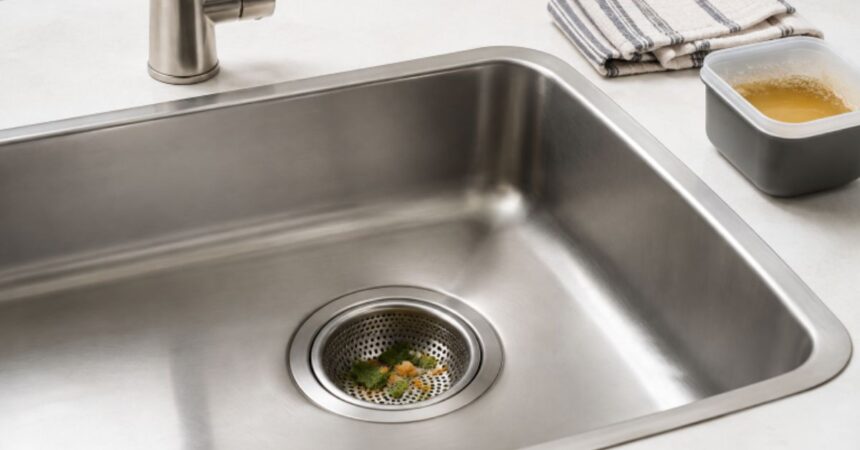
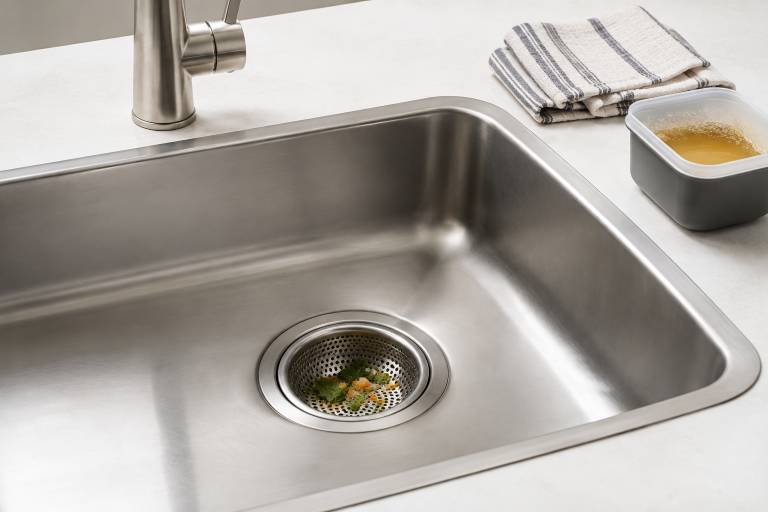
Warm grease looks harmless as it leaves a pan, but it can coat pipe walls as it cools. Wipe oily cookware with a disposable towel before washing it, collect cooled cooking oil in a container for disposal, and use a fine sink strainer for food particles. Practical prevention steps for clogged drains also emphasize scraping plates and pans before rinsing them.
- Keep bacon fat, cooking oil, butter, sauces, and grease out of the sink.
- Put coffee grounds, rice, pasta, eggshells, celery, corn husks, and fibrous scraps in the trash or an appropriate food-waste container.
- Use a garbage disposal only for small, soft leftovers, not as a replacement for a trash can.
- Empty and rinse the sink strainer regularly so that collected debris does not wash into the drain.
Bathroom Drains: Hair, Soap, and Odor Control
Hair catchers are especially useful in showers and tubs because hair can combine with soap residue and create a stubborn mass. Remove the catcher before it is full, and clean visible debris from the stopper or drain opening. Keep cotton swabs, toothpaste caps, floss, and other small items away from bathroom sinks.
Odors may come from trapped debris or a dry plumbing trap. For an infrequently used shower, utility sink, or floor drain, running a little water periodically helps maintain the water seal in the trap. If odor returns quickly after cleaning, the fixture deserves closer inspection.
Toilet Habits That Protect the Drain System
Toilets are designed for human waste and toilet paper. Wipes labeled flushable can still cause trouble, particularly when they catch on to buildup or flaws in a drain line. Paper towels, large amounts of facial tissue, hygiene products, dental floss, diapers, and cat litter should go into a nearby wastebasket instead.
- Keep a covered wastebasket within reach for guests and children.
- Store toys and small objects away from the toilet area.
- Do not rely on repeated flushing to force down a clog.
Laundry, Utility, and Outdoor Drain Maintenance
Lint, loose fibers, and detergent residue can accumulate around laundry drains and utility sinks. Check the washing machine hoses and nearby connections for leaks, and avoid overloading the washer. Once a month, look at floor drains and rarely used fixtures for slow flow or odors. Outside, keep leaves, soil, and yard debris away from surface drains, especially after landscaping work or seasonal cleanup.
Safe First Steps for a Slow Drain
- Remove visible hair, food, or debris from the drain opening.
- Use the correct plunger for the fixture, creating a good seal before plunging.
- Clean a removable stopper, screen, or accessible trap if it can be done safely.
- Use warm water for light grease-related buildup, but avoid extremely hot water around delicate fixtures or older piping.
- Stop DIY work if water backs up into another fixture or if several drains slow down together.
Why Chemical Drain Cleaners Need Careful Handling
Chemical products may open a small path through a clog without removing the buildup that caused it. Never mix drain-cleaning products, and do not add another chemical after a product has failed. Follow the label exactly, keep the area ventilated, and remember that chemical residue can create a hazard for anyone who later opens a trap or services the drain. Balanced guidance on drain-cleaning products can help homeowners compare options, but a recurring clog often calls for mechanical cleaning or professional diagnosis.
Signs the Problem May Be Deeper in the System
- More than one sink, tub, or toilet drains slowly at the same time.
- Water rises in a tub or shower when a toilet is flushed.
- Gurgling comes from drains, toilets, or floor drains.
- Sewer-like odors return after routine cleaning.
- The same fixture repeatedly backs up despite plunging or clearing the trap.
- Water appears around a cleanout, foundation area, or outdoor drain.
These symptoms can indicate a restriction beyond a single sink or shower drain. Professionals may use a drain snake, camera inspection, or water-jetting equipment, depending on the pipe material, blockage location, and condition of the line.
A Simple Drain-Care Schedule
- Daily: Keep grease, food scraps, hair, and non-flushable items out of drains.
- Weekly: Empty sink strainers and clean shower hair catchers.
- Monthly: Check visible plumbing connections, utility sinks, and rarely used drains.
- Seasonally: Clear outdoor drains and inspect areas near cleanouts or heavy landscaping.
- As needed: Address odors, gurgling, recurring slow flow, and backups promptly.
Common Questions Homeowners Ask
How often should household drains be cleaned?
There is no single schedule for every home. Consistent prevention may be enough for many households, while older plumbing, hard water, heavy use, or repeat clogs may require more frequent attention.
Is boiling water safe for every drain?
Very hot water can help with minor grease residue, but caution is wise around older plastic piping, delicate fixtures, and manufacturer-specific instructions. Warm water is the safer default.
Why does the same drain keep clogging?
The cause may be buildup farther down the line, repeated grease deposits, a lodged object, pipe damage, or an issue with drainage layout. Repeated temporary fixes do not always solve the underlying problem.
Can baking soda and vinegar fix a serious clog?
Household mixtures may freshen a drain or help with light residue, but they are unlikely to remove a deep blockage, root intrusion, or damaged pipe.
Small Habits Help Prevent Bigger Drain Problems
Clear drains are usually the result of simple routines: strainers in sinks, hair catchers in showers, careful disposal habits, and attention to early warning signs. For Brigham City homeowners, a few minutes of regular drain care can reduce the risk of unpleasant odors, slow fixtures, and messy backups. When the same issue returns, finding the cause is the most productive next step.