
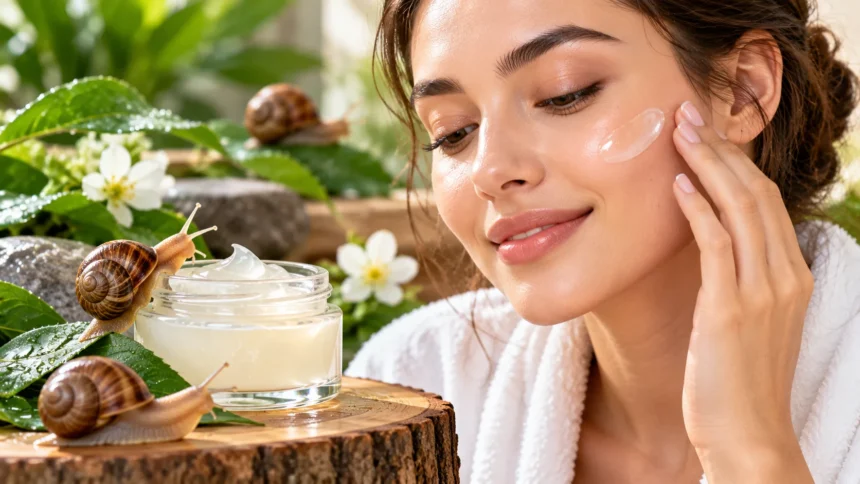
Snail mucin has become a popular ingredient in skincare products, especially hydrating serums, facial essences, and moisturizers. Known for its unique texture and moisture-retaining properties, this ingredient is frequently associated with Korean skincare routines. Beauty enthusiasts often use snail mucin products to support hydrated, comfortable skin and improve the overall appearance of their complexion.
Despite its unusual name, snail mucin is not a new discovery. Snail secretions have been investigated for their biological properties, and cosmetic manufacturers have developed products containing filtered snail secretion ingredients. Their popularity has increased through skincare discussions, product reviews, and growing interest in moisture-focused skincare routines.
However, understanding snail mucin benefits requires separating promising scientific findings from exaggerated marketing claims. While snail mucin contains substances that may support hydration and skin conditioning, evidence for some advertised benefits remains limited. This guide explains what snail mucin is, how it works, its potential skincare benefits, common side effects, and how to introduce it into a skincare routine.
What Is Snail Mucin?
Snail mucin is a secretion produced by snails that helps protect and lubricate their bodies as they move. In skincare, manufacturers use processed snail secretion filtrate as an ingredient in cosmetic formulations. This material contains a mixture of water, proteins, sugars, and other compounds that vary according to the snail species and processing methods.
Snail mucin is commonly found in facial essences, serums, creams, and moisturizing products. Its popularity is particularly associated with Korean beauty products, where lightweight hydration and layered skincare routines are common. Different formulations may contain varying concentrations of snail secretion filtrate alongside other moisturizing ingredients.
Although snail mucin is often marketed as a multifunctional ingredient, its effects depend on the finished product. Concentration, supporting ingredients, and individual skin characteristics can influence performance. Understanding these differences helps consumers evaluate skincare claims without assuming every snail mucin product provides identical results.
Why Is Snail Mucin So Popular in Skincare?
Snail mucin has gained attention because of its reputation as a moisturizing ingredient with a distinctive gel-like consistency. Many products are designed to provide hydration without the heavy feeling associated with some traditional creams. This texture appeals to people who prefer lightweight skincare products that spread easily across the skin.
Korean skincare trends have also contributed to its popularity. Brands frequently include snail secretion filtrate in products promoted for skin hydration, comfort, and barrier support. Online beauty communities and social media discussions have introduced the ingredient to audiences beyond traditional Korean skincare markets.
Another reason is the growing interest in maintaining the skin barrier rather than using numerous intensive treatments. Snail mucin products often fit into simple hydration-focused routines. However, popularity and positive reviews do not establish that the ingredient is medically effective for every skin concern.
1. Snail Mucin May Help Hydrate the Skin
One of the most commonly discussed snail mucin benefits is its ability to support skin hydration. Snail secretion filtrate contains compounds that may contribute to moisture retention when incorporated into suitable cosmetic formulations. Hydrated skin often feels more comfortable and appears smoother than skin affected by dryness.
Some snail mucin products include additional humectants such as glycerin or hyaluronic acid. These ingredients help attract and retain water within the outer layers of the skin. Consequently, the moisturizing effects of a finished product may come from several ingredients working together rather than snail mucin alone.
Hydration needs vary depending on skin type, climate, and skincare habits. A lightweight essence may provide comfortable moisture for some people, while others benefit from applying a moisturizer afterward. Choosing a product based on its complete formulation is more useful than focusing exclusively on one featured ingredient.
2. Snail Mucin May Support the Skin Barrier
The skin barrier helps protect the body from external irritants while limiting unnecessary moisture loss. When the barrier becomes disrupted, the skin may feel dry, tight, or uncomfortable. Moisturizing products can support normal barrier function by improving hydration and reducing dryness.
Snail mucin is often included in skincare products designed to promote a hydrated and comfortable complexion. Certain components of snail secretions have attracted scientific interest for their biological properties. However, direct clinical evidence showing that snail mucin alone repairs a damaged human skin barrier remains limited.
People experiencing dryness may benefit from formulations that combine hydrating ingredients with suitable emollients and protective moisturizers. Consistent gentle skincare is generally more important than relying on one trendy ingredient. Persistent redness, irritation, or skin discomfort may require professional evaluation rather than cosmetic experimentation.
3. Snail Mucin Can Improve the Appearance of Skin Texture
Skin texture refers to the way the skin’s surface looks and feels. Dryness can make the complexion appear rough or uneven, while adequate hydration may create a smoother appearance. Moisturizing products containing snail mucin can help improve the feel of dry skin.
Many snail mucin essences spread easily and leave a hydrated finish after application. This can temporarily make the skin appear softer and more even. The effect is often related to surface hydration rather than permanent changes in the skin’s underlying structure.
Claims that snail mucin dramatically resurfaces skin or removes deep texture problems should be approached cautiously. Conditions involving acne scars, enlarged pores, or persistent roughness may have different causes. A qualified dermatologist can help identify appropriate treatments when ordinary moisturizing products are insufficient.
4. Snail Mucin May Help Skin Feel Softer
Soft, comfortable skin depends partly on maintaining adequate moisture in the outermost skin layers. When skin becomes dry, it may feel rough or less flexible. Moisturizing products can improve comfort by supporting hydration and reducing the sensation of surface dryness.
Snail mucin is often formulated into lightweight serums and creams that leave the skin feeling conditioned. Some products combine it with soothing or moisturizing ingredients to create a more comfortable finish. The exact results depend on the product and how an individual’s skin responds.
Softness should not be confused with medical skin repair. A product may improve surface comfort without treating an underlying condition. If dryness is accompanied by persistent itching, cracking, or significant inflammation, appropriate medical advice is more useful than repeatedly adding cosmetic products.
5. Snail Mucin May Improve the Appearance of Fine Lines
Fine lines can become more noticeable when the skin is dehydrated. Moisturizing products may temporarily make these lines appear less prominent by improving the skin’s surface hydration. Snail mucin is frequently included in products marketed for this cosmetic effect.
Some laboratory research has explored the biological activity of compounds found in snail secretions. However, findings from laboratory studies do not automatically demonstrate meaningful improvements in human facial wrinkles. High-quality clinical evidence for significant anti-aging effects remains limited.
Snail mucin should therefore be viewed primarily as a possible moisturizing ingredient rather than a proven treatment for wrinkles. Daily sun protection and an appropriate skincare routine have a stronger established role in maintaining skin health. Cosmetic products can support comfort without needing to promise dramatic changes in appearance.
6. Snail Mucin May Support Comfortable-Looking Skin
Snail mucin products are sometimes marketed as soothing skincare options. Their moisturizing formulations may help skin feel more comfortable when dryness contributes to tightness. Some people appreciate these products because they can provide hydration without a thick or greasy texture.
However, soothing claims depend on the complete formulation and individual tolerance. Added fragrances, preservatives, or other active ingredients may irritate sensitive skin. Snail secretion filtrate itself can also cause reactions in some individuals, so a product should not automatically be considered gentle.
People with sensitive skin may prefer fragrance-free formulations with simple ingredient lists. Patch testing a new product can help identify some unwanted reactions before broader use. Persistent burning, swelling, or irritation is a reason to stop using the product and seek appropriate medical guidance.
7. Snail Mucin Can Complement a Simple Skincare Routine
A practical advantage of many snail mucin products is their compatibility with straightforward moisturizing routines. Lightweight essences and serums can be used alongside gentle cleansers and suitable moisturizers. This makes them appealing to people who prefer a manageable daily skincare routine.
Snail mucin does not need to replace established skincare essentials. A gentle cleanser helps remove dirt and excess oil, while a moisturizer supports hydration. Broad-spectrum sunscreen during the day provides important protection against ultraviolet radiation.
Adding more products does not necessarily produce better results. A simple routine that feels comfortable and is easy to maintain is often preferable to using numerous unfamiliar ingredients. Snail mucin can be an optional addition rather than a requirement for healthy skin.
What Is Snail Mucin Made Of?
Snail mucin is a complex mixture of substances produced naturally by snails. Depending on the species and processing methods, it may contain proteins, glycoproteins, carbohydrates, and other biological compounds. These components contribute to the secretion’s physical properties and have attracted scientific interest.
Some skincare marketing describes snail mucin as containing naturally occurring compounds associated with hydration or tissue processes. However, the actual composition can vary, and not every commercial product contains the same measurable amounts. Processing and filtration can further influence the final ingredient.
The finished skincare product also contains other components, including water, preservatives, and ingredients used to improve texture or stability. These additional substances can strongly influence how the product performs. Reviewing the complete ingredient list is therefore more useful than assuming all snail mucin formulas are equivalent.
Is Snail Mucin Good for Dry Skin?
Snail mucin products may be useful for dry skin because many are formulated to provide additional hydration. Dry skin often benefits from ingredients that help retain water and improve surface comfort. Lightweight snail mucin essences can contribute to this process when they are well tolerated.
However, an essence alone may not provide enough moisture for people experiencing substantial dryness. A suitable cream or lotion can help reduce moisture loss by providing additional emollient and protective ingredients. Product selection should reflect individual needs rather than following a fixed sequence of skincare steps.
Dry skin can also be influenced by weather, cleansing habits, medications, and underlying skin conditions. If dryness remains severe or uncomfortable despite gentle care, professional evaluation may be appropriate. Snail mucin should not be considered a substitute for treatment when a medical cause is present.
Is Snail Mucin Good for Oily Skin?
People with oily skin may appreciate lightweight skincare products that provide hydration without a heavy finish. Some snail mucin essences have a gel-like texture that spreads easily and absorbs comfortably. Their suitability depends on the complete formulation and individual preferences.
Oily skin still needs appropriate hydration, but not every moisturizing product feels comfortable for everyone. Non-comedogenic formulations may be helpful for individuals concerned about clogged pores. However, a non-comedogenic label does not guarantee that a product will never contribute to breakouts.
Snail mucin is not a proven treatment for excessive oil production. If persistent oiliness is accompanied by acne or irritation, targeted skincare or professional guidance may be more appropriate. Choosing gentle products that suit your skin is more useful than trying to eliminate normal skin oils completely.
Is Snail Mucin Good for Acne-Prone Skin?
Snail mucin is frequently discussed in connection with acne-prone skin because many products emphasize hydration and skin comfort. Moisturizing can be useful for people using acne treatments that cause dryness. A suitable product may help maintain comfort without replacing acne treatment.
However, snail mucin has not been established as a reliable treatment for acne. Breakouts involve several biological processes, including clogged follicles, inflammation, and changes in oil production. A moisturizing essence does not necessarily address these causes.
People with acne-prone skin should evaluate the complete formulation and introduce new products carefully. Some ingredients may be well tolerated, while others can cause irritation or breakouts. Persistent or painful acne is best discussed with a healthcare professional who can recommend evidence-based treatment options.
Can Snail Mucin Help With Acne Scars?
Snail mucin is sometimes marketed for improving the appearance of marks left after acne. Hydrating products can make the skin feel smoother, but this does not mean they can reliably treat permanent acne scars. Different types of marks require different approaches.
Post-inflammatory discoloration and indented acne scars are not the same problem. Discoloration involves changes in skin pigmentation, while indented scars involve changes in skin structure. Moisturizing alone generally cannot reverse significant structural scarring.
Although research has explored the wound-related properties of certain snail secretions, evidence supporting commercial snail mucin products for acne scar correction remains insufficient. People concerned about persistent marks can discuss suitable options with a dermatologist. Avoid assuming that dramatic before-and-after claims represent typical results.
Does Snail Mucin Brighten the Skin?
Some beauty products containing snail mucin are promoted for a brighter-looking complexion. Improved hydration can make dry, dull-looking skin appear fresher and more comfortable. This cosmetic effect may contribute to the perception that a product improves overall skin radiance.
However, snail mucin is not a well-established treatment for hyperpigmentation or uneven skin tone. Products advertised for brightening may contain additional ingredients that influence their effects. Their performance should be evaluated based on the full formulation rather than attributing all results to snail secretion filtrate.
Skin tone variations are normal and do not need correction. People who want to address persistent discoloration should use suitable sun protection and consider professional advice when necessary. Gentle skincare is preferable to products making exaggerated promises about changing natural skin color.
How to Use Snail Mucin in a Skincare Routine
Snail mucin products are available in several formats, including essences, serums, and moisturizers. The appropriate application method depends on the manufacturer’s instructions. Some lightweight products are designed to be applied after cleansing, while richer formulations may function as a moisturizer.
Start with a small amount and observe how your skin responds. Applying several new skincare products at the same time can make it difficult to identify the cause of irritation. Introducing one product gradually allows you to assess comfort and tolerance more clearly.
Snail mucin is optional and does not need to be applied multiple times to provide a benefit. Follow the product directions and maintain other basic skincare habits. If irritation occurs, discontinue use rather than attempting to overcome the reaction through repeated application.
Should You Apply Snail Mucin on Damp or Dry Skin?
Many moisturizing serums and essences can be applied to slightly damp skin, depending on product instructions. This may help distribute the formulation comfortably across the face. However, it is not a universal requirement for every snail mucin product.
Some formulations are designed for application to clean, dry skin. Others may be incorporated into a routine after a hydrating toner or similar product. The most appropriate method depends on the ingredients and instructions provided by the manufacturer.
There is no need to use complicated application methods to make snail mucin effective. Gentle handling and consistent basic skincare are usually sufficient. If a product feels sticky, uncomfortable, or irritating, using less or selecting a different formulation may be more appropriate.
Can You Use Snail Mucin Every Day?
Many cosmetic products containing snail mucin are formulated for regular use. However, daily suitability depends on the individual’s skin tolerance and the ingredients included in the product. A formula containing additional active ingredients may have different recommendations from a simple moisturizing essence.
There is no universal requirement to use snail mucin daily. Some people may prefer occasional application, while others incorporate a suitable product into a regular routine. The most important consideration is whether the skin remains comfortable and free from unwanted reactions.
Follow manufacturer instructions and avoid applying excessive amounts. If the product causes redness, itching, or irritation, stop using it. People with existing skin conditions may benefit from discussing new skincare ingredients with a dermatologist before making substantial routine changes.
Can You Combine Snail Mucin With Other Skincare Ingredients?
Snail mucin is commonly included in routines that also contain moisturizing ingredients such as glycerin, hyaluronic acid, and ceramides. These ingredients can support hydration through different mechanisms. Their combination may be useful when the finished products are suitable for the individual’s skin.
Some people also use snail mucin alongside products containing vitamin C, retinoids, or exfoliating acids. However, compatibility depends on the complete formulations and the skin’s tolerance. A moisturizing product does not eliminate irritation that may occur from stronger active ingredients.
Using too many products simultaneously can increase the likelihood of discomfort and make reactions difficult to identify. Introduce new ingredients gradually and follow appropriate product guidance. If a treatment prescribed by a clinician is involved, professional advice should take priority over general skincare trends.
Snail Mucin vs. Hyaluronic Acid
Snail mucin and hyaluronic acid are both associated with moisturizing skincare, but they are different ingredients. Hyaluronic acid is a well-characterized humectant that helps bind water. Snail mucin is a complex biological mixture that may contain several substances with different properties.
Hyaluronic acid is commonly used in serums, creams, and lotions to support skin hydration. Snail mucin products may provide similar cosmetic comfort, although research on the specific ingredient is less extensive. The effects of either product depend on concentration and overall formulation.
There is no need to assume that one ingredient is universally superior. People may prefer different textures, ingredient combinations, or product formats. Selecting an affordable, comfortable moisturizer is often more valuable than choosing products based solely on popularity.
Potential Side Effects of Snail Mucin
Although many people tolerate snail mucin products, unwanted reactions are possible. Some individuals may experience redness, itching, stinging, or irritation after application. These reactions can result from snail secretion filtrate or other ingredients in the finished formulation.
Allergic reactions are another concern, especially for individuals with known sensitivities. People with dust mite or mollusk-related allergies may wish to seek professional advice because possible cross-reactivity has been discussed, although risk cannot be predicted for every person. A cosmetic product should not automatically be considered hypoallergenic.
Stop using a product if concerning symptoms appear. Significant swelling, widespread hives, or breathing difficulties require urgent medical attention. People with persistent irritation should consult a qualified healthcare professional rather than continuing to use a product that causes discomfort.
Is Snail Mucin Safe for Sensitive Skin?
Snail mucin products may be tolerated by some individuals with sensitive skin, particularly when the formulation contains few additional irritants. However, sensitivity varies considerably between people. An ingredient described as soothing in marketing materials can still produce an unwanted reaction.
Fragrances, essential oils, preservatives, and other active ingredients may influence a product’s suitability. Choosing a simple formulation and checking the ingredient list can help reduce unnecessary exposure. Patch testing may identify some reactions, although it cannot guarantee that a product will be suitable for everyone.
People with eczema, rosacea, or frequently irritated skin may require additional caution. Products that feel comfortable for one person may aggravate another person’s symptoms. A dermatologist can provide individualized guidance when skin sensitivity is persistent or difficult to manage.
Is Snail Mucin Cruelty-Free or Vegan?
Snail mucin is an animal-derived ingredient because it comes from snail secretions. Therefore, skincare products containing genuine snail secretion filtrate are generally not considered vegan. Some products marketed as alternatives use plant-based or synthetic ingredients instead.
Cruelty-free claims require separate consideration because the term can refer to different testing and manufacturing practices. The absence of animal testing does not automatically mean an ingredient is vegan. Similarly, a company’s description of its snail collection process may not establish independent animal welfare verification.
Consumers interested in ethical sourcing should review manufacturer information and the standards used to support product claims. Transparency varies between brands. Choosing a product that aligns with personal preferences is reasonable, and snail mucin is not essential for maintaining healthy skin.
How to Choose a Good Snail Mucin Product
Choosing a snail mucin product begins with identifying your skincare needs and preferred texture. People seeking lightweight hydration may prefer an essence, while those who want a richer finish may choose a cream. The complete ingredient list provides more useful information than the product name alone.
Look for clear labeling, suitable packaging, and manufacturer guidance about intended use. Fragrance-free formulations may appeal to people who are sensitive to added scents. The concentration of snail secretion filtrate can vary, and a higher advertised percentage does not automatically guarantee better performance.
Price is another consideration because effective hydration does not require an expensive product. Compare formulations rather than choosing solely according to online popularity. A simple moisturizer that your skin tolerates well may be just as useful for everyday hydration.
Common Snail Mucin Skincare Mistakes to Avoid
One common mistake is expecting snail mucin to resolve every skin concern. Although it may support hydration, it is not a proven cure for acne, pigmentation problems, or permanent scars. Treating it as a miracle ingredient can create unrealistic expectations.
Another mistake is introducing several new skincare products at once. This makes it more difficult to identify which ingredient causes irritation or discomfort. A gradual approach is especially useful for individuals with sensitive skin or existing skin conditions.
Some people also assume that applying more product automatically improves results. Excessive application may simply leave the skin feeling sticky without providing additional benefits. Following product instructions and maintaining a manageable skincare routine is generally the more practical approach.
Conclusion
Snail mucin is a popular skincare ingredient that may help support hydration, improve surface softness, and contribute to a comfortable-looking complexion. Its lightweight texture and association with Korean skincare have contributed to its widespread popularity. However, scientific evidence supporting some advertised benefits remains limited.
The effectiveness of a snail mucin product depends on its complete formulation, supporting ingredients, and individual skin tolerance. It should not replace established skincare essentials or medical treatments for persistent skin conditions. People with sensitive skin should introduce new products cautiously and discontinue use if irritation develops.
Whether you decide to use snail mucin is a matter of personal preference rather than a skincare necessity. Gentle cleansing, appropriate moisturizing, and daily sun protection provide a useful foundation for healthy skin. Choosing products that feel comfortable and meet your individual needs is more important than following every trending ingredient.
Frequently Asked Questions
1. What Are the Main Benefits of Snail Mucin?
Snail mucin products may help hydrate the skin, improve surface softness, and support a comfortable complexion. However, many additional claims, including substantial wrinkle reduction or scar treatment, lack strong clinical evidence.
2. Is Snail Mucin Good for Your Face?
Snail mucin can be suitable for facial skincare when the formulation is well tolerated. It is commonly used in hydrating essences and moisturizers, but results depend on individual skin needs and product ingredients.
3. Can Snail Mucin Remove Acne Scars?
There is insufficient clinical evidence that commercial snail mucin products can remove acne scars. Moisturizing may improve surface appearance, but structural scarring and persistent discoloration often require different approaches.
4. Can I Use Snail Mucin Every Day?
Many snail mucin products are designed for regular application, but daily use is not necessary for everyone. Follow manufacturer instructions and stop using the product if irritation or discomfort occurs.
5. Is Snail Mucin Better Than Hyaluronic Acid?
Neither ingredient is universally better. Hyaluronic acid is a well-studied moisturizing humectant, while snail mucin is a complex ingredient used in hydrating formulations. The best choice depends on product quality and skin tolerance.