
Understand Your Natural Skin Tone
Choosing the perfect lipstick shade becomes much easier when you first understand your natural skin tone. Skin tone usually falls into broad categories such as fair, light, medium, tan, deep, or rich. Knowing where your complexion sits helps narrow down colors that are likely to look balanced, flattering, and harmonious against your face.
Fair and light skin tones often work beautifully with soft pinks, peachy nudes, rosy shades, and lighter reds. Medium and tan complexions can usually carry warmer corals, berry tones, brick reds, and rich neutrals. Deep skin tones often look striking in plum, wine, chocolate, burgundy, deep red, and vibrant berry shades.
These suggestions are helpful starting points rather than strict rules. Personal preference, clothing, makeup style, and lighting can all change how a lipstick looks. The best shade is ultimately one that enhances your features and makes you feel comfortable, so use skin tone as a guide instead of treating it as a limitation.
Identify Your Skin Undertone
Your undertone is the subtle color beneath the surface of your skin, and it can strongly influence how lipstick appears. The three main undertones are warm, cool, and neutral. Warm undertones often have golden, yellow, or peach notes, while cool undertones may appear pink, red, or bluish beneath the skin.
One simple method is to look at the veins on your wrist in natural daylight. Veins that appear more green may suggest a warm undertone, while blue or purple veins can indicate a cool undertone. If your veins appear somewhere between the two, you may have a neutral undertone that works well with many lipstick colors.
Warm undertones often suit coral, terracotta, warm red, caramel, and peach-based lipstick shades. Cool undertones usually pair well with berry, mauve, blue-based red, plum, and rosy pink. Neutral undertones can experiment with both warm and cool lip colors, making it easier to switch between different looks.
Choose the Right Nude Lipstick
Finding the perfect nude lipstick can be surprisingly difficult because a shade that looks natural on one person may appear washed out on another. A flattering nude should usually add subtle definition rather than completely match your skin. Choosing a shade slightly deeper than your natural lip color often creates a more balanced and polished result.
People with fair skin may prefer pink-beige or soft peach nudes, while medium complexions often suit caramel, rosy beige, or warm brown tones. Tan and deep complexions can look beautiful in richer mocha, cinnamon, chocolate, and warm brown shades. The undertone of the nude should also complement the undertone of your skin.
If a nude lipstick looks too pale, use a slightly deeper lip liner around the edges and blend it inward. This adds dimension and prevents the lips from disappearing into the complexion. A small amount of gloss in the center can also create a softer, fuller-looking finish without changing the overall nude effect.
Find a Red Lipstick That Flatters You
Red lipstick is one of the most classic makeup choices, but not every red looks the same once applied. Some reds contain warm orange undertones, while others lean toward blue, berry, or neutral tones. Finding the right version can make your complexion appear brighter and create a polished, confident makeup look.
Warm skin undertones often pair beautifully with tomato red, brick red, coral red, and orange-red shades. Cool undertones typically suit cherry red, cranberry, raspberry, and blue-based red. Neutral undertones can wear a wide variety of reds, from warm scarlet to balanced true red and deeper wine tones.
The intensity of the red matters too. Bright reds create a bold statement, while deeper reds can feel elegant and sophisticated. If you are new to red lipstick, try applying a small amount and blending it into the lips for a softer stain before moving to a fully opaque application.
Pick Pink and Berry Shades Carefully
Pink lipstick can range from delicate blush tones to vivid fuchsia, so choosing the right version depends on both your complexion and desired look. Softer pinks often create a fresh everyday appearance, while brighter shades can become the main focus of your makeup. Undertone again plays an important role in how flattering the color appears.
Warm complexions often suit coral pink, peach pink, rosewood, and warm raspberry shades. Cool undertones can look especially flattering in baby pink, mauve pink, magenta, and blue-based berry colors. Deeper skin tones can carry rich raspberry, plum berry, and bold fuchsia beautifully because these colors provide enough contrast and depth.
Berry lipsticks are particularly versatile because they can be worn lightly or built into a dramatic finish. A sheer berry tint works well during the day, while a deeper application creates a stronger evening look. If the shade feels too intense, gently blot the lips and add a little balm for a softer result.
Match Lipstick With Your Natural Lip Color
Your natural lip pigmentation can affect how a lipstick looks once it is applied. The same product may appear brighter, deeper, warmer, or cooler depending on your natural lip tone. This is why a shade shown online or on another person may look noticeably different when you try it yourself.
People with naturally light lips may notice lipstick colors appear close to the shade shown in the tube. More pigmented lips can sometimes deepen or alter lighter lipsticks, especially sheer formulas. If you want the true color to appear, lightly preparing the lips with a neutral base can help reduce some of the natural pigmentation underneath.
You can also use your natural lip color as inspiration when choosing an everyday lipstick. Look for a shade one or two levels deeper than your lips to create natural definition. This approach often produces an effortless “your lips but better” effect that works well for work, casual outings, and minimal makeup days.
Consider Your Hair and Eye Color
Although skin tone and undertone are more important, hair and eye color can help refine your lipstick choice. A lip shade that creates gentle contrast with your hair can make the overall makeup look feel more balanced. The effect is subtle, but it can be useful when choosing between several similar colors.
People with blonde or light brown hair may enjoy soft roses, peaches, pinks, and classic reds. Dark brown or black hair can pair beautifully with deeper berries, burgundy, rich reds, and warm neutrals. Red or copper hair often works especially well with terracotta, coral, brick, cinnamon, and warm rose shades.
Eye color can also inspire lipstick choices. Warm brown or hazel eyes can be complemented by terracotta, warm nude, and berry shades, while blue or gray eyes may stand out against mauve or cool red. Green eyes can look striking with rose, berry, plum, and warm pink lip colors.
Choose Lipstick Based on the Occasion
The perfect lipstick shade can change depending on where you are going and how you want your makeup to feel. Everyday situations often call for comfortable, easy-to-maintain colors. Soft nude, rose, mauve, peach, and neutral pink shades can create definition without requiring frequent touch-ups or feeling overly dramatic.
For professional settings, choose polished shades that complement your complexion without overpowering the rest of your look. Muted rose, warm beige, soft berry, or classic neutral red can work well depending on your personal style. Cream or satin finishes often create a balanced appearance that feels refined without looking too glossy or too matte.
Special events allow more freedom to experiment with bold lip colors. Deep plum, bright red, burgundy, dramatic berry, or vivid pink can make the lips a focal point. When wearing a strong lipstick, keeping the rest of your makeup slightly simpler can create a balanced and elegant overall appearance.
Think About Lipstick Finish and Texture
Lipstick color is only part of the final look because finish can significantly change how a shade appears. Matte lipsticks often look deeper and more intense, while glossy or sheer formulas can make the same color appear lighter. Satin and cream finishes usually sit between the two and provide a softer, more traditional appearance.
Matte formulas are popular for bold shades and long-lasting looks, but they can emphasize dryness if the lips are not properly prepared. Cream and satin lipsticks feel more comfortable for many people and provide a slight sheen. Glossy finishes can make lips appear fuller and work especially well with nude, pink, and soft berry shades.
Consider your comfort as well as the visual effect. A beautiful color will not feel perfect if you dislike the texture or constantly worry about it drying your lips. Choosing a finish that matches your daily routine makes it more likely that you will actually enjoy wearing the shade regularly.
Test Lipstick in Natural Light
Lighting can dramatically change the appearance of lipstick, especially when shopping indoors. Store lighting may be warmer, cooler, or brighter than normal daylight, which can make a shade appear more flattering than it actually is. Whenever possible, check the color in natural light before deciding whether it suits your complexion.
If you are testing lipstick on your hand, remember that your hand may not perfectly match the tone of your face or lips. Testing near the fingertips can sometimes provide a closer representation because the skin there may have a little more natural color. The most accurate test is still seeing the shade directly on your lips.
Take a few minutes before making a final decision, especially with strong colors. Look at the lipstick from different angles and compare it with your overall complexion. A flattering shade should make your face look balanced and lively rather than making your skin appear dull, overly red, or washed out.
Use Lip Liner to Adjust the Shade
Lip liner can completely change how a lipstick shade looks, making it one of the most useful tools for customizing lip color. A darker liner creates depth and definition, while a similar-toned liner makes the overall finish look smoother. It can also help prevent lipstick from spreading outside the natural lip line.
If a lipstick looks too light, use a deeper neutral or brown liner to add contrast. For a shade that feels too bright, applying a muted liner underneath can soften the result. You can also blend the liner over most of the lips before adding lipstick to create a slightly deeper and more dimensional color.
Choose lip liners that complement the lipstick instead of creating an obvious harsh outline. Blend the edges gently before applying your main color. This technique works especially well with nude, brown, berry, and red lipsticks because it allows you to adjust the finished shade without buying an entirely new product.
Avoid Common Lipstick Shade Mistakes
One common mistake is choosing lipstick only because it looks attractive in the tube. Lipstick interacts with your skin tone, undertone, and natural lip color, so the final result can be very different. Whenever possible, test the product rather than assuming the visible color will look exactly the same once applied.
Another mistake is following beauty trends without considering whether the shade suits your personal style. A trendy pale nude or extremely dark brown may look stunning on someone else but feel uncomfortable on you. The perfect lipstick should fit your complexion, lifestyle, and confidence level rather than simply matching what is popular.
People also sometimes give up on a shade too quickly. A lipstick that seems slightly wrong can often be improved with lip liner, gloss, blotting, or layering another color. Experimenting with small adjustments can help you get more use from your collection and discover combinations that are more flattering.
Build a Versatile Lipstick Collection
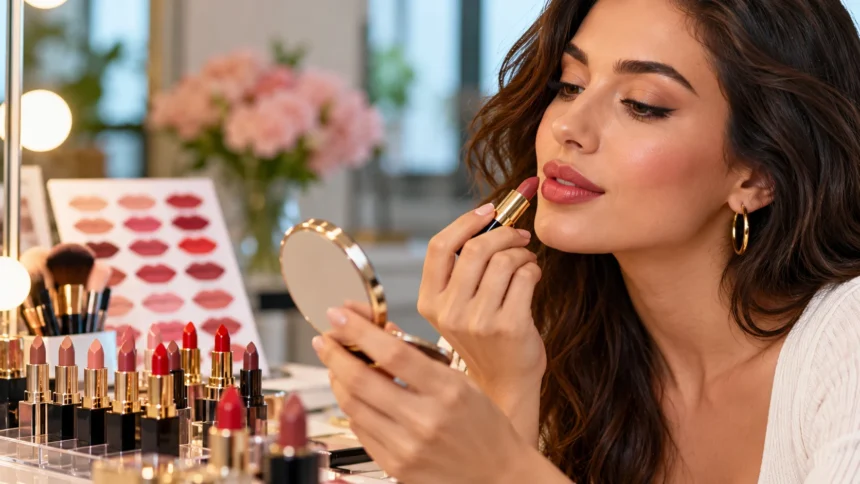
You do not need dozens of lipstick shades to create different looks. A practical collection can include a natural nude, everyday rose or mauve, classic red, deeper berry, and one brighter statement color. These shades can cover most casual, professional, and special occasions while keeping your makeup routine simple.
Choose colors that work with the clothing and makeup you wear most often. If your wardrobe contains mostly warm neutrals, terracotta, caramel, warm red, and peach shades may be especially useful. If you wear cooler colors, mauve, berry, blue-red, and rosy neutrals may blend more naturally with your overall style.
You can also create new shades by mixing products you already own. Layering a nude over a bright lipstick can soften it, while adding berry or brown can deepen lighter colors. A smaller collection of versatile lipsticks can therefore provide many different looks without requiring a separate product for every occasion.
Conclusion
Choosing the perfect lipstick shade becomes easier when you understand your skin tone, undertone, natural lip color, and personal style. These factors help you narrow down the colors that are most likely to complement your features. From soft nudes to bold reds, the right shade should make your complexion feel balanced and lively.
Finish, occasion, and application technique also influence the final result. A shade can look completely different depending on whether it is matte, glossy, sheer, or paired with lip liner. Testing colors in natural light and making small adjustments can help you achieve a more flattering and wearable finish.
Most importantly, lipstick should be enjoyable rather than stressful. Beauty guidelines can help you find flattering options, but they should never stop you from experimenting. Choose colors that make you feel comfortable, confident, and expressive, because the perfect lipstick shade is ultimately the one you genuinely enjoy wearing.
FAQs
How do I know which lipstick shade suits me?
Start by identifying your skin tone and undertone, then test shades that complement both. Warm complexions often suit peach and terracotta, while cool complexions usually work well with berry, mauve, and blue-red tones.
What lipstick color makes lips look fuller?
Lighter and medium shades with cream or glossy finishes can make lips appear fuller by reflecting more light. Using a slightly deeper liner around the edges can also create additional dimension.
Which lipstick shade is best for everyday wear?
Soft nude, rose, mauve, peach, and neutral pink shades are great everyday choices. Look for a color slightly deeper than your natural lip tone for a polished but effortless appearance.
How do I choose the right nude lipstick?
Choose a nude that is slightly deeper than your skin or natural lip color rather than matching your complexion exactly. Consider undertone as well, using peachy nudes for warmth and rosy nudes for cooler skin.
Can I wear lipstick shades outside my undertone?
Yes. Undertone recommendations are guidelines, not strict rules. You can wear any color you enjoy, and lip liner, gloss, layering, or different finishes can help adjust shades to suit your look.