

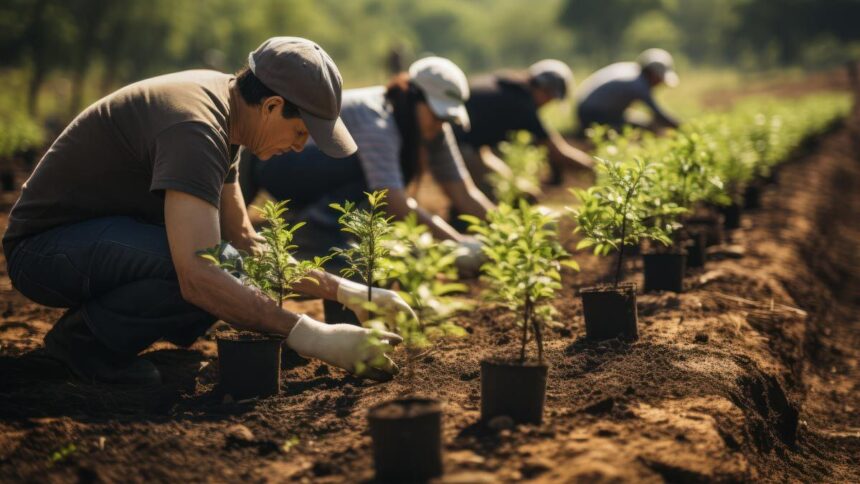
Forests are among the most important natural systems on Earth. They support wildlife, regulate climate, protect soil, influence rainfall, store carbon, filter water, provide food and materials, and support the livelihoods of millions of people.
Understanding the role of forests in maintaining a healthy planet is essential because forests are connected to many of the environmental systems that make life possible.
A forest is much more than a collection of trees. It is a complex ecosystem containing plants, animals, fungi, microorganisms, soil, water, and countless biological relationships.
When forests are healthy, they provide benefits that extend far beyond their boundaries.
When forests are damaged or removed, the effects can influence climate, biodiversity, water supplies, agriculture, and human communities.
Protecting forests is therefore not only about conserving trees. It is about protecting the ecological systems that support the planet as a whole.
Why Are Forests Important?
Forests perform many essential environmental functions.
They absorb carbon dioxide from the atmosphere, provide habitats for wildlife, reduce soil erosion, influence local temperatures, and help maintain water cycles.
Forests also provide materials such as timber, fibers, medicines, fruits, nuts, and other products.
Millions of people depend directly on forests for employment, food, shelter, fuel, and cultural traditions.
The importance of forests can therefore be understood from environmental, economic, and social perspectives.
Healthy forests contribute to a stable planet while supporting human communities.
Forests Help Regulate the Climate
One of the most important roles of forests is climate regulation.
Trees absorb carbon dioxide during photosynthesis.
Carbon dioxide is a greenhouse gas that contributes to warming when concentrations increase in the atmosphere.
Trees use carbon dioxide to produce energy-rich compounds that support growth.
Some of the absorbed carbon becomes stored in trunks, branches, roots, leaves, and forest soils.
Because forests can store significant amounts of carbon, they play an important role in the global carbon cycle.
How Do Forests Store Carbon?
Trees capture carbon through photosynthesis.
The carbon becomes part of the tree’s biological structure.
As trees grow, they continue storing carbon in wood and roots.
Forest soils can also contain large amounts of carbon.
Dead leaves, branches, roots, and other organic matter gradually decompose and contribute carbon to the soil.
This means that a mature forest stores carbon both above and below ground.
When forests are cleared, burned, or severely degraded, some of this stored carbon can return to the atmosphere.
Protecting existing forests can therefore help maintain important natural carbon stores.
Forests Influence Local Temperatures
Forests can help regulate local temperatures.
Tree canopies provide shade.
Leaves also release water vapor through a process called transpiration.
As water moves from plants into the atmosphere, it can contribute to cooling.
Large forested areas can therefore influence local and regional temperature patterns.
Urban areas also benefit from trees because shade and evapotranspiration can help reduce excessive heat.
This is one reason urban forests and tree planting can be valuable in cities.
Forests Play an Important Role in the Water Cycle
Forests are closely connected to water.
Trees absorb water through their roots and release some of it into the atmosphere through transpiration.
Water vapor can contribute to cloud formation and rainfall.
Forest vegetation also affects how rain reaches the ground.
Leaves and branches intercept rainfall, while roots and soil help water infiltrate into the ground.
These processes can influence rivers, groundwater, and local water availability.
Healthy forests therefore play an important role in maintaining natural water cycles.
Forests Help Protect Water Quality
Forest soils and vegetation can act as natural filters.
Rainwater moving through forested landscapes may pass through soil and vegetation before entering rivers, streams, or groundwater.
Plant roots help stabilize soil and reduce the movement of sediment.
This can help maintain cleaner water supplies.
Forested watersheds are important sources of drinking water in many regions.
Protecting forests around rivers, lakes, and reservoirs can therefore support water quality for both wildlife and people.
Forests Can Reduce Soil Erosion
Soil erosion occurs when wind or water removes the upper layers of soil.
Tree roots help hold soil in place.
Leaves and branches also reduce the force of rainfall before it reaches the ground.
Forest floors are often covered with leaves, branches, and organic material that further protect soil.
When forests are removed, exposed soil may become more vulnerable to erosion.
Severe erosion can reduce agricultural productivity, damage waterways, and increase sediment in rivers.
Forest protection can therefore contribute to long-term soil stability.
Forests Support Biodiversity
Forests are home to an enormous variety of life.
They provide food, shelter, nesting areas, breeding grounds, and migration routes for countless species.
Birds may live in tree canopies.
Mammals depend on forest vegetation.
Insects contribute to pollination and decomposition.
Fungi help recycle nutrients.
Microorganisms support soil processes.
Every layer of a forest can provide habitat for different organisms.
Protecting forests therefore helps preserve biodiversity.
Why Is Biodiversity Important?
Biodiversity refers to the variety of living organisms within ecosystems.
Diverse ecosystems tend to perform many ecological functions.
Different species contribute to pollination, nutrient cycling, soil formation, pest control, seed dispersal, and decomposition.
Genetic diversity can also help species adapt to changing environmental conditions.
When biodiversity declines, ecosystems may become less resilient.
Protecting forests is therefore one of the most important ways to protect global biodiversity.
Tropical Forests Are Particularly Important for Biodiversity
Tropical forests contain exceptionally high levels of biological diversity.
Warm temperatures, abundant moisture, and complex vegetation create many different habitats.
A single tropical forest may contain thousands of plant species along with enormous numbers of insects, birds, reptiles, mammals, fungi, and microorganisms.
Many species are highly specialized and may exist only within relatively small geographic areas.
This makes tropical deforestation particularly concerning.
When these habitats disappear, species may have nowhere else to survive.
Temperate Forests Also Provide Major Ecological Benefits
Temperate forests occur in regions with moderate climates and distinct seasons.
They support many species of trees, birds, mammals, insects, and fungi.
These forests also store carbon, protect watersheds, stabilize soil, and provide recreation.
Many temperate forests have been heavily altered by agriculture, development, and historical logging.
Restoration and sustainable management can help protect the ecological services they continue to provide.
Boreal Forests Play a Major Role in the Global Climate
Boreal forests are found across northern regions of the world.
They often consist of coniferous trees adapted to cold climates.
These forests cover vast areas and store large amounts of carbon.
Significant carbon is also stored in soils and organic material beneath the trees.
Climate change can affect boreal forests through warmer temperatures, wildfires, pests, and changing growing conditions.
Because of their size and carbon storage, changes in boreal forests can have global consequences.
Mangrove Forests Protect Coastal Areas
Mangroves are forests that grow along tropical and subtropical coastlines.
Their complex root systems help slow waves and reduce coastal erosion.
They can also provide protection from storms and flooding.
Mangrove forests are important breeding and nursery habitats for fish and other marine species.
They also store significant amounts of carbon in vegetation and coastal soils.
Protecting mangroves can therefore support climate resilience, fisheries, biodiversity, and coastal communities.
Forests Provide Habitat for Pollinators
Pollinators such as bees, butterflies, birds, and other animals are essential for many plants.
Some agricultural crops also depend on pollination.
Forests provide food, shelter, and nesting areas for many pollinator species.
When natural habitats are lost, pollinator populations may decline.
Maintaining forests and other natural landscapes near agricultural areas can therefore support ecosystem health and food production.
Forests Support Agriculture
Forests and agriculture are often considered separate land uses, but they are closely connected.
Forests influence rainfall, water supplies, soil protection, biodiversity, and pollinator populations.
These services can support nearby farms.
Trees can also be deliberately integrated into agricultural systems through agroforestry.
Windbreaks can protect crops.
Trees can provide shade for livestock.
Certain tree species can improve soil conditions.
Sustainable landscapes often work best when forests and agriculture are planned together.
Forests Can Help Reduce Flooding
Forests can influence how quickly water moves across the land.
Tree roots and forest soils allow more rainwater to infiltrate into the ground.
Vegetation can slow surface runoff.
This does not mean forests can prevent every flood.
Extreme rainfall can still create severe flooding.
However, healthy forested landscapes can help moderate water movement and reduce certain forms of runoff.
Protecting forests in watersheds can therefore contribute to flood-management strategies.
Forests Can Help Reduce Landslide Risk
Tree roots strengthen soil and help stabilize slopes.
This can reduce erosion and may help lower landslide risk in certain areas.
Deforestation on steep slopes can make soil more vulnerable, particularly during heavy rainfall.
However, landslide risk depends on many factors including geology, rainfall, slope angle, and soil type.
Forest protection can be one useful part of broader land-management efforts in vulnerable regions.
Forests Provide Oxygen
Trees release oxygen during photosynthesis.
Plants use sunlight to convert carbon dioxide and water into sugars that store chemical energy.
Oxygen is released as part of this process.
Forests contribute to atmospheric oxygen production, although much of the oxygen cycle also involves oceans and other ecosystems.
The importance of forests is therefore broader than simply producing oxygen.
Their carbon storage, water regulation, biodiversity, and soil protection roles are equally significant.
Forests Support Human Health
People benefit from forests in many ways.
Forests provide food, traditional medicines, clean water, and materials.
They can also provide opportunities for recreation and physical activity.
Spending time in natural environments may contribute to relaxation and psychological well-being for many people.
Urban trees can provide shade and improve local environmental conditions.
Healthy forests therefore contribute both directly and indirectly to human health.
Forests Provide Medicines and Biological Resources
Many medicines and useful chemical compounds have originated from plants, fungi, and other organisms.
Forests contain enormous biological diversity that remains only partially studied.
Some species may contain compounds useful for medicine, agriculture, or industry.
When species disappear before they are studied, potential scientific knowledge may also be lost.
Biodiversity conservation therefore has value not only for ecosystems but also for future research and innovation.
Forests Support Indigenous Peoples and Local Communities
Many Indigenous peoples and local communities have deep cultural, economic, and spiritual relationships with forests.
Forests may provide food, medicine, building materials, fuel, and livelihoods.
Traditional ecological knowledge can also provide valuable information about sustainable land management.
Forest conservation efforts are often more effective when communities with long-standing connections to the land are involved in decision-making.
Protecting forests should therefore include respect for local rights and cultural traditions.
Forests Support Rural Economies
Forests provide employment through forestry, tourism, conservation, agriculture, and the production of forest products.
Timber can support construction and manufacturing.
Non-timber forest products may include fruits, nuts, honey, mushrooms, medicinal plants, fibers, and resins.
When managed responsibly, forests can provide long-term economic value.
Unsustainable exploitation, however, may produce short-term profits while damaging future productivity.
Sustainable forest management attempts to balance economic use with conservation.
What Is Sustainable Forest Management?
Sustainable forest management involves using and protecting forests in ways that maintain their ecological, social, and economic value over time.
This may include carefully planned harvesting, protecting wildlife habitats, maintaining soil and water quality, controlling fires, restoring damaged areas, and monitoring forest health.
Sustainable management recognizes that some forests may provide timber or other products while still maintaining important ecological functions.
The goal is to avoid using resources faster than forests can recover.
Why Deforestation Is a Global Concern
Deforestation occurs when forests are permanently cleared and converted to other land uses.
Agriculture, roads, mining, development, and infrastructure can all contribute.
When forests disappear, carbon may be released.
Wildlife loses habitat.
Soil becomes more vulnerable to erosion.
Water cycles can change.
Local communities may lose important resources.
The impact depends on the type of forest, the scale of clearing, and what replaces it.
Large-scale deforestation can create both local and global environmental consequences.
Forest Degradation Is Different From Deforestation
A forest does not need to disappear completely to lose ecological value.
Forest degradation occurs when a forest remains present but becomes less healthy or less capable of performing its natural functions.
Logging, repeated fires, pollution, overgrazing, invasive species, and fragmentation can all contribute.
A degraded forest may store less carbon and support fewer species.
Protecting forests therefore requires more than simply maintaining tree cover.
Forest quality matters too.
What Is Forest Fragmentation?
Forest fragmentation occurs when large forests are divided into smaller isolated areas.
Roads, farms, cities, and infrastructure can separate habitats.
Fragmentation can make it harder for wildlife to move between areas.
It may also create more exposed forest edges.
Edge environments can have different temperatures, moisture levels, and species than forest interiors.
Wildlife corridors can help connect fragmented habitats and allow species to move more safely.
Landscape planning is therefore an important part of forest conservation.
Wildfires and Forest Health
Fire is a natural part of some forest ecosystems.
Certain plants have evolved to survive or even depend on periodic fire.
However, unusually intense or frequent wildfires can severely damage forests.
Climate conditions, accumulated vegetation, land management, and human activity can all influence wildfire risk.
Effective forest management may include controlled burns, fuel reduction, monitoring, and emergency planning.
The appropriate strategy depends on the forest type and local ecology.
Climate Change Can Increase Forest Stress
Climate change can influence forests through rising temperatures, altered rainfall, drought, storms, pests, and wildfire.
Some tree species may struggle as local conditions change.
Others may expand into new regions.
Long-lived forests cannot move quickly, which makes rapid climate changes particularly challenging.
Forest conservation strategies increasingly need to consider future climate conditions rather than relying only on historical patterns.
Healthy and diverse forests may be more resilient to some changes.
Forest Pests and Diseases Are a Growing Concern
Trees can be affected by insects, fungi, bacteria, and other pathogens.
Healthy forests usually contain natural interactions between pests and predators.
However, invasive species or changing climate conditions can create severe outbreaks.
Warmer winters may allow certain insects to survive in greater numbers.
Global trade can accidentally transport pests into new regions.
Monitoring and rapid response can help protect forests from damaging outbreaks.
Forest Restoration Can Repair Damaged Landscapes
Forest restoration involves helping degraded or cleared landscapes recover ecological function.
This can include planting native trees, allowing natural regeneration, controlling invasive species, improving soil, or reconnecting fragmented habitats.
Restoration does not always mean planting as many trees as possible.
Successful projects need to consider the original ecosystem.
Grasslands, wetlands, and other natural habitats should not automatically be converted into forests.
Good restoration focuses on the right ecosystem in the right place.
Natural Forest Regeneration Can Be Powerful
Sometimes forests can recover naturally when harmful pressures are removed.
Seeds may already exist in the soil.
Nearby trees can provide additional seeds.
Roots and stumps may produce new growth.
Natural regeneration can be less expensive than large-scale tree planting and may produce more ecologically appropriate forests.
However, degraded areas may sometimes require active restoration.
The best method depends on local conditions.
Tree Planting Is Helpful but Not a Complete Solution
Tree planting receives significant attention as an environmental strategy.
It can provide real benefits when carefully planned.
However, planting trees cannot replace the protection of existing mature forests.
Older forests often contain complex ecosystems and large carbon stores that take decades or centuries to develop.
Poorly designed planting projects can also introduce inappropriate species or create monocultures with limited biodiversity.
Forest conservation and restoration should therefore work together.
Native Trees Are Often Important for Restoration
Native tree species are adapted to local conditions and support local wildlife.
They may provide food or habitat for insects, birds, and mammals that evolved alongside them.
Using diverse native species can help create more resilient ecosystems.
In some situations, non-native species may have legitimate agricultural or commercial uses.
However, ecological restoration usually benefits from prioritizing species suited to the local ecosystem.
Reforestation and Afforestation Are Different
Reforestation involves restoring forests in areas that were previously forested.
Afforestation involves establishing forests in places that have not recently supported forests.
The distinction matters.
Reforestation can help restore lost ecosystems.
Afforestation may provide benefits in appropriate locations, but planting trees on natural grasslands or other valuable ecosystems can cause environmental harm.
Land-use history and local ecology should guide decisions.
Forests and the Carbon Cycle
The carbon cycle describes how carbon moves through the atmosphere, oceans, plants, soils, and rocks.
Forests are active parts of this cycle.
Trees absorb atmospheric carbon dioxide.
Some carbon is stored in biomass and soil.
When leaves fall or trees die, decomposition returns some carbon to the environment.
Fires can also release stored carbon.
Healthy forests can remain significant carbon reservoirs when growth and storage are maintained over long periods.
Why Protecting Existing Forests Matters for Climate
New trees take time to grow.
A newly planted tree stores relatively little carbon compared with a mature tree.
Existing forests already contain decades or centuries of accumulated carbon.
Destroying those forests and later planting new trees may result in significant carbon losses that take many years to recover.
Protecting intact forests can therefore provide immediate climate benefits alongside biodiversity and water protection.
Forests and Rainfall Patterns
Forests can influence atmospheric moisture.
Trees absorb water from soil and release vapor through transpiration.
Large forest systems can recycle significant amounts of water into the atmosphere.
This moisture may contribute to rainfall locally and downwind.
Deforestation can therefore influence regional water cycles.
The relationship is complex and depends on geography and climate, but forests are clearly active participants in atmospheric moisture movement.
Forests Help Maintain Healthy Rivers
Healthy forests can support river ecosystems.
Roots reduce erosion.
Vegetation filters runoff.
Shade can help regulate stream temperature.
Leaves and woody material provide food and habitat for aquatic organisms.
Forest removal near rivers may increase sediment, temperature, and nutrient runoff.
Riparian forests, which grow alongside rivers and streams, are therefore particularly important for freshwater health.
Forests Support Fisheries
Freshwater and coastal fisheries can depend indirectly on forests.
Riparian forests influence river quality.
Mangroves provide nursery habitats for many marine species.
Forest vegetation can reduce sediment and pollution entering waterways.
Healthy forests can therefore support fish populations and the communities that depend on fishing.
This demonstrates how forest conservation can benefit ecosystems far beyond the forest itself.
Urban Forests Improve City Environments
Urban forests include trees in parks, streets, gardens, and other city spaces.
These trees provide shade and can help reduce local heat.
They may also absorb certain air pollutants, reduce stormwater runoff, provide wildlife habitat, and improve neighborhood appearance.
Urban forests can make cities more comfortable and resilient.
However, successful urban forestry requires proper species selection, maintenance, soil space, and long-term planning.
Planting trees without maintaining them produces limited benefits.
Trees Can Help Manage Urban Stormwater
Cities contain many hard surfaces such as roads, roofs, and parking areas.
Rainwater cannot easily soak into these surfaces.
This can increase runoff and pressure on drainage systems.
Trees can intercept rainfall.
Roots and surrounding soil can also help water infiltrate into the ground.
Urban forests are therefore often included in green-infrastructure strategies designed to manage stormwater more naturally.
Forests and Air Quality
Trees can interact with air pollutants.
Leaves may capture certain particles, and vegetation can influence local air movement.
Trees also remove carbon dioxide through photosynthesis.
However, the relationship between forests and air quality is complex.
Some tree species produce natural organic compounds that can participate in atmospheric chemistry.
Forest planning should therefore consider species, location, and local pollution sources.
Overall, healthy vegetation can contribute to more livable environments.
Forests Provide Recreational Opportunities
Forests provide opportunities for hiking, camping, wildlife observation, photography, education, and tourism.
Protected forest areas can attract visitors and support local economies.
Recreation can also strengthen public appreciation for conservation.
However, tourism needs to be managed carefully.
Excessive visitors, litter, road construction, and poorly planned development can damage sensitive ecosystems.
Sustainable tourism attempts to balance access with environmental protection.
Forests Have Cultural and Spiritual Importance
Forests have held cultural significance throughout human history.
They appear in stories, traditions, religions, art, and community identities.
Sacred forests and culturally important landscapes exist in many regions.
Environmental planning that focuses only on economic value may overlook these deeper connections.
Protecting forests can therefore preserve cultural heritage as well as biodiversity.
Forests Can Support Climate Adaptation
Climate adaptation involves preparing for the effects of changing environmental conditions.
Forests can help communities adapt.
Mangroves can reduce coastal wave energy.
Forested watersheds can support water supplies.
Urban trees can reduce heat.
Healthy soils can reduce erosion.
Forests may therefore function as natural infrastructure.
Protecting ecosystems can sometimes complement engineered solutions such as sea walls, drainage systems, and water-treatment facilities.
What Is Nature-Based Climate Adaptation?
Nature-based adaptation uses ecosystems to help reduce environmental risks.
Examples include restoring mangroves to protect coastlines, conserving forests to protect watersheds, or expanding urban trees to reduce heat.
These approaches can provide several benefits at once.
A restored mangrove may support fisheries, biodiversity, carbon storage, and storm protection.
Nature-based solutions are therefore increasingly considered alongside conventional infrastructure.
Forest Conservation Supports Sustainable Development
Sustainable development aims to improve human well-being while protecting the resources needed by future generations.
Forests contribute directly to this goal.
They support food, water, energy, livelihoods, biodiversity, and climate regulation.
Unsustainable forest loss may produce short-term economic benefits but create long-term environmental costs.
Sustainable development requires considering both present and future value.
Forest protection is therefore closely connected to long-term economic planning.
Sustainable Timber Can Reduce Pressure on Forests
Wood is a renewable material when forests are managed responsibly.
Sustainably managed forests can produce timber while maintaining important ecological functions.
Certification systems may help buyers identify products associated with particular forest-management standards.
However, certification quality and enforcement can vary.
Consumers and businesses should consider supply-chain transparency rather than assuming every wood product has the same environmental impact.
Reducing Waste Can Help Protect Forests
Paper, packaging, furniture, and construction materials can all come from forests.
Using these materials efficiently can reduce unnecessary resource demand.
Recycling paper and wood products can extend material life.
Designing buildings and products to use materials efficiently may also reduce waste.
Reducing consumption alone cannot solve deforestation, but resource efficiency can support broader forest-conservation efforts.
Responsible Consumption Can Influence Forest Protection
Consumer demand can influence land use.
Agricultural commodities, timber, paper, and other products may be connected to forest conversion in certain regions.
Companies can improve supply-chain monitoring and sourcing standards.
Consumers can also support products associated with credible environmental practices.
However, responsibility should not fall entirely on individuals.
Government policy, corporate accountability, and land-management systems play major roles in determining whether forests are protected.
Forest Monitoring Is Becoming More Advanced
Modern technology allows forests to be monitored in greater detail.
Satellites can detect changes in tree cover.
Drones can inspect difficult-to-reach areas.
Sensors can monitor fire, climate, or wildlife.
Artificial intelligence can analyze large environmental datasets.
These tools can help governments, scientists, and conservation organizations identify deforestation or degradation more quickly.
Technology cannot replace forest protection policies, but it can improve information and enforcement.
Satellite Monitoring Helps Detect Forest Loss
Satellites regularly capture images of Earth’s surface.
By comparing images over time, researchers can identify changes in forest cover.
This makes it possible to detect large-scale clearing even in remote regions.
Frequent monitoring can support enforcement and conservation planning.
Satellite data can also help track wildfire damage, restoration, and changes in vegetation health.
Artificial Intelligence Can Support Forest Conservation
Artificial intelligence can analyze satellite images, wildlife recordings, climate information, and other environmental data.
AI systems may help identify illegal clearing, classify vegetation, estimate forest condition, or detect species.
These tools can process information much faster than manual review alone.
However, reliable data and human expertise remain necessary.
Technology works best when combined with local knowledge and effective environmental management.
Communities Are Essential to Forest Protection
Long-term conservation is difficult without local participation.
People living near forests often understand local ecological conditions and depend directly on forest resources.
Conservation policies that ignore community needs can create conflict.
Programs that involve local people in monitoring, management, tourism, sustainable harvesting, and restoration can create stronger incentives for protection.
Successful forest conservation often depends on aligning environmental goals with community benefits.
Governments Play a Major Role in Forest Conservation
Governments influence forests through land-use planning, protected areas, environmental regulations, infrastructure development, agriculture policy, and law enforcement.
Clear property rights and effective governance can reduce illegal forest clearing.
Public investment can support restoration and monitoring.
Governments can also create incentives for sustainable forestry and conservation.
Weak enforcement, however, can undermine even strong environmental laws.
Policy and governance are therefore central to forest protection.
Businesses Can Help Reduce Forest Loss
Companies influence forests through supply chains and resource use.
Agriculture, construction, mining, food production, paper, furniture, and retail can all affect land-use decisions.
Businesses can reduce impacts by improving traceability, sourcing responsibly, reducing waste, and avoiding suppliers connected to illegal deforestation.
Corporate commitments are most useful when they include measurable targets and transparent reporting.
Environmental claims should be supported by real changes rather than marketing alone.
Individuals Can Help Protect Forests
Individuals can support forests through practical choices.
Reducing unnecessary paper and wood waste can help.
Supporting credible conservation organizations may contribute to protection and restoration.
People can participate in local tree planting or habitat restoration.
Responsible recreation can reduce damage in forest areas.
Consumers can also learn about the environmental impacts of products they buy.
Individual action is useful, but large-scale forest protection also requires policy, industry, and community involvement.
Why Forest Conservation Requires Long-Term Thinking
Forests develop slowly.
Mature ecosystems may take decades or centuries to form.
Damage can occur much faster.
A forest may be cleared in days, while restoring its biological complexity can take generations.
This difference makes prevention particularly important.
Protecting healthy forests is often easier than recreating them after they have been lost.
Long-term planning is therefore essential for forest conservation.
Forests and Future Generations
Future generations will depend on the same environmental systems people use today.
They will need clean water, productive soils, stable climates, biodiversity, food, and natural resources.
Forests support all of these.
Destroying forests can reduce the options available to future societies.
Protecting them is therefore an investment in long-term environmental security.
Forest conservation is not only about preserving nature today.
It is about maintaining natural systems that people will continue to depend on decades from now.
The Benefits of Healthy Forests
Healthy forests provide multiple benefits simultaneously.
They store carbon.
They support wildlife.
They protect soil.
They influence water cycles.
They provide materials and livelihoods.
They support recreation and cultural traditions.
They can reduce certain environmental risks.
Few natural systems provide such a broad combination of ecological, economic, and social benefits.
This is why forest conservation is central to many environmental strategies.
The Biggest Threats to Forests
Forests face several major threats.
Agricultural expansion can replace natural forests.
Illegal logging can damage ecosystems.
Mining and infrastructure can fragment habitats.
Climate change can increase drought, pests, and wildfire risk.
Pollution and invasive species can create additional stress.
The most important threats vary by region.
Effective conservation therefore requires locally appropriate solutions rather than one universal strategy.
How Can Forests Be Protected?
Protecting forests requires several approaches working together.
Existing natural forests need strong protection.
Degraded forests may require restoration.
Agriculture and infrastructure should be planned to reduce unnecessary forest loss.
Sustainable forestry can reduce damage where timber is harvested.
Local communities should participate in land management.
Better monitoring can improve enforcement.
Consumers and companies can also reduce demand connected to destructive practices.
Forest protection is most effective when environmental, economic, and social considerations are addressed together.
Why Protecting Forests Is Better Than Replacing Them
A planted forest can provide valuable benefits.
However, it may not immediately replace the complexity of an old natural forest.
Mature forests often contain diverse species, layered vegetation, complex soils, dead wood, fungi, and ecological relationships developed over long periods.
Protecting existing forests therefore deserves high priority.
Restoration and tree planting remain important, but they should complement conservation rather than justify unnecessary forest destruction.
The Future of Forest Conservation
Future forest conservation is likely to combine traditional ecological knowledge with modern technology.
Satellite monitoring can detect changes quickly.
AI can analyze environmental information.
Drones can support surveys.
Improved climate models can help identify vulnerable ecosystems.
At the same time, community-based management and Indigenous knowledge will remain important.
The future will depend on combining scientific information, effective governance, sustainable economics, and local participation.
Technology provides tools.
Successful conservation still depends on human decisions.
Final Thoughts
Understanding the role of forests in maintaining a healthy planet reveals how deeply forests are connected to the systems that support life.
Forests store carbon, influence climate, support biodiversity, regulate water cycles, protect soil, provide wildlife habitat, and contribute to human livelihoods.
They also support agriculture, fisheries, healthcare, recreation, culture, and economic activity.
Protecting forests is therefore about much more than protecting trees.
It means protecting entire ecosystems and the natural processes they support.
Deforestation, forest degradation, climate change, wildfires, pests, and land conversion continue to place pressure on forests around the world.
Addressing these challenges requires stronger conservation, sustainable forest management, responsible agriculture, better supply chains, community involvement, environmental monitoring, and long-term planning.
Restoration and tree planting can help repair damaged landscapes, but protecting healthy existing forests remains especially important.
A mature forest contains ecological value that cannot be recreated quickly.
Healthy forests support a healthy planet.
Protecting them today helps maintain cleaner water, richer biodiversity, more stable soils, stronger communities, and a more resilient environment for future generations.
Frequently Asked Questions About Forests and the Environment
Why are forests important for the planet?
Forests help regulate climate, store carbon, protect soil, support water cycles, provide wildlife habitat, maintain biodiversity, and support human communities.
How do forests help fight climate change?
Trees absorb carbon dioxide through photosynthesis and store carbon in wood, roots, leaves, and soil. Protecting forests helps maintain these natural carbon stores.
Do forests produce oxygen?
Yes. Trees release oxygen during photosynthesis. However, forests also provide many other important benefits such as carbon storage, water regulation, soil protection, and biodiversity conservation.
How do forests affect rainfall?
Trees release water vapor through transpiration. Large forests can influence atmospheric moisture and contribute to regional rainfall patterns.
How do forests protect water supplies?
Forest vegetation slows runoff, reduces erosion, improves water infiltration, and can help filter sediment before water enters rivers, reservoirs, or groundwater.
Why are forests important for biodiversity?
Forests provide food, shelter, breeding areas, and habitat for countless plant, animal, fungal, and microbial species.
What animals depend on forests?
Birds, mammals, reptiles, amphibians, insects, fish, and many other organisms depend directly or indirectly on forest ecosystems.
Why are tropical forests important?
Tropical forests contain extremely high levels of biodiversity and store significant amounts of carbon. Many species found in tropical forests exist nowhere else.
Why are boreal forests important?
Boreal forests cover vast northern areas and store large amounts of carbon in trees, soil, and organic material.
Why are mangrove forests important?
Mangroves protect coastlines, reduce erosion, provide fish nursery habitats, support biodiversity, and store substantial amounts of carbon.
How do forests prevent soil erosion?
Tree roots stabilize soil, while leaves, branches, and forest-floor vegetation reduce the force of rain and surface runoff.
Can forests prevent floods?
Forests cannot prevent every flood, but they can slow runoff, increase water infiltration, and help moderate how quickly rainwater moves through landscapes.
How do forests support agriculture?
Forests influence water availability, protect soil, support pollinators, maintain biodiversity, and can provide wind protection or shade in agroforestry systems.
What is deforestation?
Deforestation is the permanent removal of forests so land can be converted to agriculture, development, mining, infrastructure, or other uses.
What is forest degradation?
Forest degradation occurs when a forest remains but loses ecological health or productivity because of logging, fires, pollution, invasive species, or other pressures.
What is forest fragmentation?
Forest fragmentation happens when large forest areas are divided into smaller isolated sections by roads, agriculture, cities, or infrastructure.
Why is forest fragmentation harmful?
Fragmentation can reduce wildlife movement, increase exposed forest edges, isolate populations, and make ecosystems more vulnerable.
What is reforestation?
Reforestation is the restoration of forest in an area that previously supported forest cover.
What is afforestation?
Afforestation is the establishment of forest in an area that has not recently been forested.
Is planting trees enough to stop climate change?
No. Tree planting can contribute to climate and conservation goals, but it cannot replace reducing greenhouse gas emissions or protecting existing natural forests.
Why is protecting existing forests important?
Existing mature forests already store large amounts of carbon and support complex biodiversity that can take decades or centuries to develop.
What is sustainable forest management?
Sustainable forest management involves using forest resources while maintaining the ecosystem’s health, biodiversity, productivity, and long-term value.
How does climate change affect forests?
Climate change can alter rainfall, increase heat and drought, worsen wildfire risk, shift species ranges, and increase vulnerability to some pests and diseases.
How do wildfires affect forests?
Fire can be natural and beneficial in some ecosystems, but unusually severe or frequent fires can destroy habitats, release carbon, and slow forest recovery.
How do forests support human health?
Forests provide clean water, food, medicines, recreational spaces, shade, livelihoods, and opportunities for physical and psychological well-being.
How do forests support local economies?
Forests provide timber, tourism, food products, medicines, fuel, fibers, and employment related to conservation and land management.
Why are Indigenous communities important to forest conservation?
Many Indigenous communities have long-standing knowledge of local ecosystems and often play important roles in sustainable forest management and protection.
How can technology help protect forests?
Satellites, drones, sensors, and artificial intelligence can help detect forest loss, monitor fires, identify degradation, and support conservation planning.
What is natural forest regeneration?
Natural regeneration allows forests to recover through seeds, roots, and natural ecological processes after damaging pressures are removed.
Is natural regeneration better than tree planting?
It can be in suitable areas because it may be less expensive and maintain locally adapted species. However, some degraded landscapes require active planting or restoration.
How do forests help cities?
Urban forests provide shade, reduce heat, help manage stormwater, support wildlife, improve local environments, and provide recreational spaces.
Can forests improve air quality?
Trees can capture certain airborne particles and influence local air conditions, although their effects depend on species, location, weather, and pollution sources.
Why are forests important for future generations?
Forests support natural resources and ecosystem services that future generations will need, including clean water, biodiversity, stable soils, and climate regulation.
What are the biggest threats to forests?
Major threats include agricultural expansion, logging, mining, infrastructure development, climate change, wildfires, invasive species, and pollution.
How can individuals help protect forests?
People can reduce waste, support responsible forest products, participate in conservation and restoration, avoid damaging natural areas, and support credible environmental organizations.
What is the most important thing we can do to protect forests?
Protecting existing healthy forests is one of the most important steps, supported by sustainable land management, restoration, community involvement, responsible supply chains, and strong environmental policies.