

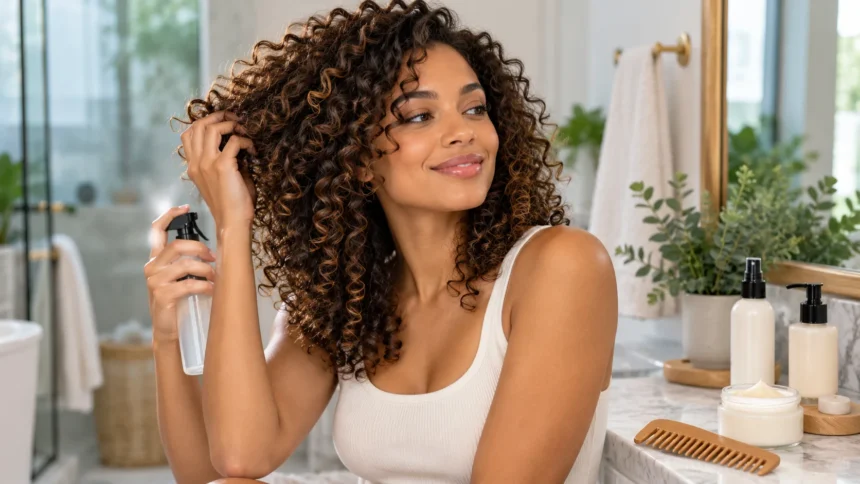
Curly hair can look beautifully defined after washing, but maintaining that appearance for several days can sometimes be challenging. Sleeping, humidity, daily activities, and natural movement may leave curls looking flat, frizzy, or tangled. Learning how to refresh curls between wash days can help restore curl definition, improve manageability, and maintain softness without repeating your entire washing and styling routine.
A good curl refresh routine does not require expensive products or complicated techniques. Simple methods such as lightly misting your hair with water, applying a small amount of leave-in conditioner, and gently scrunching your curls can make a noticeable difference. Whether you have loose waves, spiral curls, or tight coils, understanding your hair’s needs will help you maintain natural movement and comfortable styling between washes.
Why Do Curls Lose Definition Between Wash Days?
Curly hair naturally changes shape throughout the day because of movement, friction, humidity, and contact with clothing. Sleeping can flatten certain sections, while repeated touching may separate individual curl groups. These everyday factors can make curls appear less defined even when the hair remains clean and does not require another wash.
Moisture balance also influences how curls behave between wash days. Some strands become dry and develop more frizz, while others feel heavy because of accumulated styling products. Hair thickness, porosity, density, and natural curl pattern can affect how quickly these changes become noticeable after washing and styling.
Understanding why your curls lose their shape makes refreshing them easier. Instead of applying more products automatically, examine whether your hair needs moisture, additional hold, or gentle reshaping. Identifying the actual problem helps you choose the right technique without creating unnecessary buildup or disturbing sections that already look manageable.
Understand Your Curl Type Before Refreshing Your Hair
Different curl patterns respond differently to water, styling products, and everyday manipulation. Loose waves may lose volume when exposed to excessive moisture, while tighter curls sometimes need more conditioning to remain manageable. Understanding your natural texture can help you select a refresh method that improves definition without making your hair feel heavy.
Hair is commonly described using Type 2 waves, Type 3 curls, and Type 4 coils. However, these classifications are only general descriptions and do not fully explain how your hair responds to products. Strand thickness, scalp condition, and hair porosity can be equally important when deciding which refreshing techniques to use.
Before choosing a routine, observe which areas become flattened, dry, or tangled between washes. The crown may need additional volume, while the ends might benefit from gentle conditioning. Paying attention to these differences allows you to refresh individual sections instead of treating your entire head with the same products.
Start With a Light Water Mist to Revive Curls
Water is one of the simplest ways to refresh natural curls without washing your hair again. Light moisture can make some existing styling products easier to redistribute and help flattened sections regain their shape. A small spray bottle filled with clean water is often enough to begin a basic curl refresh routine.
Mist the sections that need attention rather than soaking your entire head. Use your hands to gently scrunch or reshape curls after applying the water. Avoid excessive spraying, particularly if your hair takes a long time to dry or becomes frizzy when repeatedly handled while damp.
Some curl patterns respond well to water alone, while others need a small amount of conditioning or styling product afterward. Allow the refreshed sections to dry before deciding whether additional treatment is necessary. Starting with water helps prevent unnecessary product buildup and makes your everyday routine easier to manage.
Use Leave-In Conditioner to Restore Softness
Leave-in conditioner can help refresh curls that feel dry, rough, or difficult to manage between washes. These products are designed to remain on the hair and improve softness while reducing friction. Lightweight formulas can be especially useful when your curls need additional conditioning without the heaviness of rich styling creams.
Apply a small amount of leave-in conditioner to slightly damp sections using your fingers. Focus on the mid-lengths and ends, where dryness and tangling are often more noticeable. Distribute the product carefully to avoid concentrating too much conditioner in one area or making the roots appear greasy.
Choose a formula that matches your hair’s thickness and moisture needs. Fine curls may respond better to lightweight sprays, while coarse or tightly coiled strands might tolerate richer products. If your hair begins feeling coated after repeated applications, reduce the amount and consider cleansing rather than continuing to add more conditioner.
Refresh Curls With the Scrunching Technique
Scrunching is a simple styling method that can encourage curls to gather into their natural shape. It involves gently lifting sections of hair upward toward the scalp using your hands. This technique is especially useful when curls have become stretched, separated, or flattened during sleep or daily activities.
Begin by lightly dampening the sections that need refreshing. Place the ends of your hair in your palms and gently lift them toward the roots before releasing. Repeat the movement around selected areas without pulling aggressively or repeatedly squeezing the same strands.
Scrunching can improve the appearance of natural curl formation, although results vary with texture and previous styling products. Some waves become more noticeable, while tighter curls may regain definition. Avoid excessive handling after scrunching because repeated touching can disrupt the shape and increase unwanted frizz.
Try Finger Coiling to Restore Individual Curls
Finger coiling is useful when certain curls lose their spiral shape while the surrounding hair remains defined. Instead of restyling your entire head, you can reshape selected strands by wrapping them gently around your finger. This targeted approach can help organize uneven sections without requiring additional heat.
Start with a small damp section and apply a little suitable styling product if needed. Wrap the hair loosely around your finger in the direction it naturally curls. Release the section carefully and allow it to maintain its shape while drying without unnecessary manipulation.
Finger coiling works particularly well for hair that naturally forms spirals, although it may not suit every texture. Avoid pulling tightly or repeatedly twisting delicate strands. Using the technique only where necessary can help maintain a natural-looking hairstyle while reducing the time spent on daily refreshing.
Choose Lightweight Curl Refresh Products
The best curl refresh products depend on your hair type, moisture needs, and styling preferences. Lightweight sprays, leave-in conditioners, mousses, and gels can help restore softness or hold without requiring a full wash. Choosing products carefully is important because repeated application may leave some curls feeling coated.
Fine curls often respond well to lightweight sprays or small amounts of mousse that support movement. Thicker or coarser curls may benefit from richer formulas when additional softness is needed. However, product texture should be selected according to individual strand characteristics rather than assuming every thick hairstyle requires heavy creams.
Start with the smallest practical amount and apply it only where your curls need attention. Allow the product to dry before deciding whether another application is necessary. This approach helps maintain definition while reducing the likelihood of buildup, greasy roots, or an overly stiff appearance.
Refresh Curly Hair Without Making It Wet
Some curly hair types can be refreshed without adding water, especially when the curls are only slightly flattened. Dry refreshing may involve gently separating sections, lifting roots, or reshaping a few strands with your fingers. This method can be convenient when you have limited time or prefer to avoid additional drying.
Begin by examining the areas that have lost volume or definition. Carefully lift the hair near the roots using your fingertips without pulling through the lengths. If individual curls have separated, you can gently arrange them into their preferred shape instead of brushing the entire hairstyle.
Dry refreshing works best when the hair remains relatively clean and existing styling products still support curl formation. Avoid excessive brushing or repeated manipulation, particularly with tightly textured hair. When significant dryness or tangling develops, a damp refresh with suitable conditioning may be more comfortable and effective.
Use Hair Gel to Restore Curl Hold
Hair gel can help restore definition when curls lose their shape between washes. A small amount of suitable gel may improve hold and reduce unwanted separation in selected sections. However, applying too much can leave the hair feeling stiff or coated, especially when previous styling products remain on the strands.
Lightly dampen the areas that need additional hold before applying a small amount of gel. Distribute it gently with your fingers and scrunch the curls into their natural shape. Avoid adding gel repeatedly throughout the day, because excessive layering may make the hairstyle difficult to manage.
Some gels form a temporary firm cast as the hair dries. Once the refreshed sections are completely dry, gently scrunching them may soften the finish while maintaining definition. Choose a level of hold that suits your preferred appearance and avoid using strong styling products when simple reshaping would be sufficient.
Reduce Frizz When Refreshing Curly Hair
Frizz can become more noticeable between wash days because of friction, humidity, and changes in moisture. Although some frizz is a normal part of textured hair, excessive dryness or rough handling may make curls difficult to manage. Gentle refreshing techniques can help improve smoothness without attempting to control every individual strand.
Begin by identifying the sections where frizz is most noticeable. Lightly dampen those areas and apply a small amount of leave-in conditioner or suitable smoothing product when needed. Use your hands to gently reshape the curls rather than repeatedly brushing through them.
Avoid applying several oils, creams, and serums at the same time simply to reduce flyaways. Too much product can leave curls heavy without addressing the underlying dryness or friction. Maintaining appropriate conditioning and minimizing unnecessary handling often supports more comfortable, manageable hair between washes.
Refresh Curls in the Morning After Sleeping
Morning is a common time for curl refreshing because sleeping can flatten certain sections and change the overall hairstyle. Friction against bedding may also increase tangling and frizz, particularly for longer or tightly textured hair. A simple morning routine can help restore your preferred appearance without repeating the entire washing process.
Begin by gently releasing any protective hairstyle and allowing your curls to settle naturally. Examine the sections that need attention before applying water or styling products. Lightly mist flattened areas and reshape them using scrunching or finger coiling, depending on your curl pattern.
Allow refreshed curls to dry before making further adjustments. If the roots appear flat, gently lift them with your fingertips after drying. Keeping your morning routine focused on problem areas can reduce unnecessary product use and make everyday styling more manageable.
Protect Your Curls Overnight for Easier Refreshing
A good nighttime routine can reduce the amount of refreshing needed the following morning. Sleeping creates friction that may separate curl groups and contribute to tangling. Using smooth bedding and comfortable protective hairstyles can help maintain definition while reducing unnecessary stress on delicate strands.
A satin pillowcase or appropriately fitted satin bonnet may help reduce friction during sleep. People with longer curls sometimes prefer a loose pineapple hairstyle, which gathers the hair near the top of the head. Avoid securing the hair too tightly because repeated pulling can create scalp discomfort and contribute to breakage.
Different curl types may benefit from different nighttime arrangements. Loose braids can help organize certain textures, while other people prefer sleeping with their hair naturally arranged inside a bonnet. Choose a method that feels comfortable and supports your preferred hairstyle without excessive tension.
Refresh Fine Curly Hair Without Weighing It Down
Fine curly hair often requires a lighter refreshing approach because individual strands can become overwhelmed by rich styling products. Excessive conditioner, heavy creams, and repeated oil application may leave fine curls appearing flat. Using minimal product helps maintain movement while restoring natural curl definition.
Start with a light mist of water and gently scrunch the sections that need attention. If additional styling support is necessary, consider a small amount of lightweight mousse or a suitable gel. Avoid concentrating conditioning products near the roots when they make your hair appear greasy.
Fine curls may also benefit from gentle root lifting after the refreshed sections have dried. Use your fingertips carefully rather than repeatedly brushing the hair. Keeping the routine simple can help preserve softness, movement, and curl shape without creating unnecessary buildup between washing sessions.
Refresh Thick and Coarse Curly Hair Properly
Thick or coarse curly hair may require a different approach because dense sections can be difficult to reach during styling. Some textures also need additional conditioning to remain manageable. Dividing the hair into smaller sections can help distribute refreshing products more evenly without saturating the entire hairstyle.
Lightly dampen the areas that need attention and apply a suitable leave-in conditioner when necessary. Use your fingers to separate and reshape sections carefully, focusing on dry ends and tangled areas. Avoid forcing a comb through stubborn knots, especially when the hair has not been adequately conditioned.
Coarse curls may respond well to richer products, but excessive application can still cause residue and heaviness. Start with a moderate amount and adjust based on how the strands feel after drying. Section-by-section refreshing often makes dense curls easier to manage while preserving their natural texture.
Refresh Curly Hair During Humid Weather
Humidity can affect curl shape by changing how hair interacts with moisture in the surrounding air. Some people notice additional frizz, while others experience changes in volume or curl definition. Understanding how your hair responds to humid conditions can help you choose suitable products and refreshing techniques.
During humid weather, a small amount of suitable styling gel or humidity-resistant product may help maintain your preferred hairstyle. Apply it carefully to sections that need additional hold rather than repeatedly coating the entire head. Avoid excessive touching throughout the day because frequent manipulation may increase frizz.
Remember that no styling product can guarantee perfectly unchanged curls during every weather condition. Natural texture, strand characteristics, and environmental moisture all influence the final appearance. Focus on maintaining comfortable, manageable hair rather than expecting complete control over every flyaway or individual curl.
Avoid Product Buildup Between Wash Days
Product buildup can develop when styling creams, oils, gels, and dry shampoos accumulate on the hair and scalp. Over time, this residue may leave curls feeling heavy, sticky, or difficult to reshape. Recognizing buildup helps you decide when refreshing is no longer as useful as proper cleansing.
Common signs include coated strands, reduced movement, greasy roots, and products that no longer distribute easily. If your curls repeatedly feel weighed down after refreshing, examine how many products you are layering. Simplifying your routine may help prevent unnecessary residue during future wash cycles.
When buildup becomes noticeable, wash your hair with a suitable shampoo rather than continuing to add styling products. An occasional clarifying shampoo may help remove stubborn residue, depending on your hair and scalp needs. Follow cleansing with appropriate conditioning to maintain softness and manageability.
Know When to Wash Instead of Refreshing Your Curls
Refreshing curls can extend the appearance of a hairstyle, but it does not replace regular scalp cleansing. Over time, sweat, natural oils, environmental residue, and styling products accumulate. Understanding when your hair needs washing helps maintain comfort and prevents refreshing products from becoming an unnecessary substitute for hygiene.
Signs that washing may be needed include persistent scalp oiliness, itching, unpleasant odors, and noticeable product buildup. Curls that feel excessively coated or difficult to detangle may also benefit from proper cleansing. The appropriate washing schedule varies according to scalp condition, activity level, and natural hair texture.
Avoid following a fixed number of refresh days if your scalp becomes uncomfortable earlier. Some people need frequent washing, while others with drier textures can comfortably wait longer. Listening to your hair and scalp needs is more useful than attempting to preserve curl definition at the expense of cleanliness.
Common Mistakes to Avoid When Refreshing Curls
One common mistake is applying too much water when only a small section needs reshaping. Completely soaking the hair can increase drying time and may disrupt curls that were already defined. Targeted refreshing allows you to address specific concerns without unnecessarily repeating your wash-day styling process.
Another mistake involves layering multiple products without allowing previous applications to dry. Excessive creams, gels, and oils can leave curls feeling sticky or heavy. Start with one suitable product, evaluate the result, and avoid adding more unless your hair genuinely needs additional conditioning or hold.
Brushing dry curls aggressively, touching damp sections repeatedly, and ignoring scalp buildup can also make refreshing less effective. These habits may increase tangling or disrupt natural curl formation. Gentle handling, minimal product application, and regular cleansing provide a more reliable approach to maintaining manageable curls.
Build a Simple Curl Refresh Routine for Busy Mornings
A practical curl refresh routine does not need to take over your morning schedule. Begin by checking which sections have become flattened or frizzy overnight. Identifying the areas that need attention helps you avoid restyling curls that already look and feel comfortable.
Use a small amount of water or suitable refreshing spray on the affected sections. Gently scrunch or finger coil the curls, then apply lightweight styling product only when necessary. Allow the hair to dry naturally or use controlled diffuser airflow if you need to reduce drying time.
Once the refreshed sections are completely dry, arrange the hairstyle gently with your fingers. Avoid excessive brushing or additional product layering after the curls have settled. A consistent, simple routine can make between-wash maintenance easier while supporting natural curl movement and reducing unnecessary styling effort.
Conclusion
Learning how to refresh curls between wash days helps maintain natural definition, softness, and manageability without repeating a complete washing routine. Simple techniques such as water misting, gentle scrunching, finger coiling, and selective conditioning can improve the appearance of flattened or dry sections. The most suitable approach depends on your curl pattern, hair density, and moisture needs.
Successful curl refreshing also involves avoiding excessive products and unnecessary manipulation. Protecting your hair overnight, using lightweight formulas when appropriate, and maintaining a comfortable scalp can reduce styling difficulties. Recognizing when washing is necessary helps prevent product buildup while supporting a balanced hair care routine.
Healthy-looking curls do not need to remain perfectly defined every day. Focus on keeping your hair comfortable, manageable, and suited to your natural texture. With gentle handling and a practical refresh routine, you can maintain soft, bouncy curls while making everyday styling easier and more convenient.
Frequently Asked Questions (FAQs)
How can I refresh curly hair without washing it?
Lightly mist flattened sections with water, gently scrunch your curls, and apply a small amount of leave-in conditioner or styling gel if needed. Allow the refreshed areas to dry before touching them further.
Is water enough to refresh curls between washes?
Water alone can help reactivate some existing styling products and reshape certain curl patterns. However, dry or frizzy sections may benefit from a small amount of suitable conditioner or styling product.
How often should I refresh my curls?
Refresh your curls whenever they need reshaping, rather than following a strict schedule. Some people refresh daily, while others only need occasional adjustments between regular hair washes.
Can I use leave-in conditioner every day on curly hair?
Yes, some hair types tolerate small daily applications, but excessive use may cause buildup. Apply only when needed and adjust the amount according to your hair’s thickness and moisture requirements.
Why do my curls become frizzy after refreshing?
Frizz may develop from excessive handling, humidity, unsuitable products, or uneven moisture distribution. Using less product, reshaping gently, and allowing curls to dry without repeated touching may help.